

Thermo Compliance
is a Division of Thermo Group that specialises in
Electrical, Water, Gas, Solar, Beetle & Electric Fence COCs
How much is a compliance certificate in Cape Town?
A compliance certificate (CoC) in Cape Town costs from R550 for a house and R480 for a flat on a cash sale. Thermo Group is a Cape Town electrical, plumbing and solar company that inspects and issues electrical, plumbing (water), gas, beetle, electric fence and solar compliance certificates for property sales, rentals and insurance. Book more than one certificate for the same property and you save R50 on each extra one. Call us on 021 203 5337 or 082 302 0683.
| Certificate | House, cash sale | Flat or sectional title, cash sale | House, transfer | Flat or sectional title, transfer |
|---|---|---|---|---|
| Electrical | R550 | R480 | R680 | R550 |
| Plumbing (water) | R550 | R480 | R680 | R550 |
| Gas | R550 | R480 | R680 | R550 |
| Beetle | R550 | R480 | R680 | R550 |
| Electric fence (houses only) | R550 | n/a | R680 | n/a |
| Solar PV | R550 | R480 | R680 | R550 |
Prices updated October 2026. They exclude any remedial work found to be needed. Each extra certificate for the same property is R50 less. Commercial properties are quoted separately.
The six certificates we issue
Electrical CoC, plumbing (water) CoC, gas CoC, beetle certificate, electric fence CoC and solar PV CoC. Tell us what the property has and we book all the inspections in one visit where possible.
How much does a compliance certificate cost in Cape Town?
At Thermo Group a Certificate of Compliance in Cape Town starts from R550 for a house and R480 for a flat on a cash sale, and from R680 for a house and R550 for a flat when the sale goes through transfer. Each extra certificate booked for the same property is R50 less. Prices exclude any remedial work found to be needed, and the final quote is confirmed when you book.
Which compliance certificates do I need to sell a house in Cape Town?
Most sellers need an electrical certificate and a plumbing (water) certificate. Depending on the property and the sale agreement you may also need a gas certificate if gas is installed, an electric fence certificate if there is a fence, a beetle certificate, and a solar PV certificate if you have a solar system. Call us and we will tell you which apply to your property.
Need a compliance certificate in Cape Town?
Electrical, plumbing, gas, fence and beetle certificates. Same-day call-back, no obligation.
Compliance Certificate Pricing
Transparent, upfront pricing for every Certificate of Compliance we issue in Cape Town. Select your details below for an instant estimate, or scroll down and book your inspection directly. Booking more than one certificate for the same property? Save R50 on every additional certificate.
| Certificate | House — Cash Sale | Flat / Sectional — Cash Sale | House — Transfer | Flat / Sectional — Transfer |
|---|
Prices correct as of 2026 and exclude any remedial work found to be required. A final quote is confirmed once your inspection is booked. Multiple certificates booked together for one property: R50 off each certificate after the first.
Get an Instant Estimate
Answer three quick questions and see your price in real time. Book more than one certificate together and save R50 on each additional one.
Select at least one certificate to see your estimate.
Please fill Out The Form Below To Book Your Inspection Today
Areas We Service In Cape Town
What is a Compliance Certificate (COC)?
A Compliance Certificate is an official document issued by a qualified, registered inspector confirming that a specific installation — electrical, plumbing, gas, electric fence or similar — meets South Africa’s legal safety standards. It gives property owners, buyers, estate agents and financial institutions confidence that the installation is safe.
When do I need a Compliance Certificate in Cape Town?
Most commonly when selling or transferring a property, but also after new electrical, plumbing, gas or electric fence work is completed, or whenever legislation requires proof an installation meets the prescribed standards.
Which suburbs does Thermo Group cover for compliance certificates?
We inspect and certify properties across Cape Town, from the Atlantic Seaboard and City Bowl through the Southern Suburbs, Southern Peninsula and Northern Suburbs to Helderberg and the Winelands. See our suburb pages for local detail, or contact us to confirm coverage for your specific address.
How quickly can Thermo Group issue a Compliance Certificate?
A COC has no fixed expiry but should be renewed whenever significant work is done, or roughly every two years for a rental property. Most inspections across our Cape Town coverage area are completed and the certificate issued within a few working days, sooner if no remedial work is needed.
What happens if my property in Cape Town doesn’t pass the compliance inspection?
If any part of the installation doesn’t meet SANS 10142-1 standards, we provide a written schedule of defects with a clear, itemised quote to fix them. Once the repairs are done, we re-inspect your Cape Town property at no extra call-out charge and issue the Certificate of Compliance as soon as it passes.
Does a Certificate of Compliance cover my geyser, stove and other appliances in Cape Town?
A COC covers the fixed electrical installation — wiring, distribution boards, earthing, and the points appliances connect to — rather than the appliances themselves. So your geyser’s wiring, isolator switch and earthing are inspected, but a faulty geyser element or stove isn’t part of the COC. If you’d like your Cape Town property’s appliances tested at the same time, we’re happy to check those during the same visit.
Do I need a separate Certificate of Compliance for a granny flat or flatlet in Cape Town?
Yes — any self-contained flatlet, granny flat or cottage with its own electrical connection needs to be included in the compliance inspection, even if it shares a meter with the main house. We check the sub-circuit, isolator and earthing for the flatlet as part of the same Cape Town COC visit, so you get one certificate covering the whole property.
What is a Water Installation Certificate?
A Water Installation Certificate is an official document confirming that a property’s water installation complies with the City of Cape Town Water By-law at the time of inspection. It certifies that the water system has been inspected by a qualified plumber and meets the municipal requirements for property transfers.
Is a Water Installation Certificate required when selling a property in Cape Town?
Yes. In the City of Cape Town, a Water Installation Certificate is required when ownership of a property is transferred. The seller is responsible for providing this certificate to the conveyancing attorney before the transfer can be finalised, unless otherwise agreed in the sale contract.
Who is responsible for obtaining the Water Installation Certificate?
In most cases, the seller is responsible for arranging and paying for the Water Installation Certificate before the property transfer takes place. However, the Offer to Purchase may contain different arrangements, so it is important to review the sale agreement carefully.
What is inspected during a Water Installation Certificate inspection?
A qualified plumber will inspect various aspects of the property’s water installation to ensure compliance with the City of Cape Town’s Water By-law. This typically includes checking:
- Visible water leaks
- Geyser installation
- Pressure control valves
- Isolation valves
- Water meter operation
- Stormwater connections
- Cross-connections between potable and non-potable water
- Plumbing fittings and pipework
- Compliance of the hot and cold water systems
The inspection helps ensure the property is not wasting water and complies with municipal regulations.
Why is a Water Installation Certificate important?
A Water Installation Certificate helps protect both buyers and sellers by confirming that the property’s plumbing installation complies with municipal requirements. It also assists in identifying hidden leaks, faulty plumbing components, and other issues that could result in water wastage, increased municipal bills, or expensive repairs after the property has been sold.
What are the most common reasons a property fails a Water Installation Certificate inspection?
Some of the most common defects include:
- Leaking taps or pipes
- Faulty toilet cisterns
- Incorrectly installed geysers
- Missing or defective pressure control valves
- Stormwater connected to the sewer system
- Missing vacuum breakers
- Cross-connections between potable and alternative water supplies
- Visible plumbing leaks
- Non-compliant plumbing alterations
Most defects can be repaired before the certificate is issued.
What happens if my property fails the inspection?
If non-compliant items are identified, the inspector will provide a report explaining the defects that require attention. Once the necessary plumbing repairs have been completed, the installation can be re-inspected and the Water Installation Certificate issued once the property complies with the applicable requirements.
Can Thermo Compliance carry out the plumbing repairs?
Yes. If your property does not comply during the inspection, Thermo Compliance can arrange for qualified plumbing professionals to complete the required repairs. Once the defects have been rectified, the property can be re-inspected and the Water Installation Certificate issued.
How long does a Water Installation Certificate inspection take?
The inspection time depends on the size and complexity of the property. Most residential inspections take between 30 minutes and one hour. Larger homes or commercial properties may require additional time.
How long is a Water Installation Certificate valid?
A Water Installation Certificate confirms that the property’s water installation complied with the City of Cape Town Water By-law at the time of the inspection. There is no fixed legal expiry period, but a new certificate is generally required each time ownership of the property is transferred.
Does every property in Cape Town need a Water Installation Certificate?
Yes. Most residential properties being transferred within the City of Cape Town require a Water Installation Certificate before transfer can be completed. This requirement forms part of the City’s efforts to reduce water wastage and ensure compliance with municipal plumbing regulations.
Does a Water Installation Certificate guarantee there are no future plumbing problems?
No. A Water Installation Certificate confirms that the visible water installation complied with the applicable municipal requirements at the time of the inspection. Plumbing systems can develop leaks or faults over time, so regular maintenance is still recommended.
Can a leaking tap cause the property to fail?
Yes. Even seemingly minor plumbing defects, such as leaking taps, leaking toilets, or visible pipe leaks, may need to be repaired before a Water Installation Certificate can be issued. These issues contribute to unnecessary water wastage and are considered during the inspection.
Are geysers inspected during the Water Installation Certificate inspection?
Yes. The geyser installation is an important part of the inspection. The inspector will assess whether the geyser installation complies with the applicable plumbing requirements, including components such as pressure control valves, drip trays where required, overflow pipework, and visible plumbing connections.
What areas does Thermo Compliance service for Water Installation Certificates?
Thermo Compliance provides Water Installation Certificate inspections throughout Cape Town and surrounding areas, including Bellville, Durbanville, Parow, Goodwood, Edgemead, Plattekloof, Milnerton, Table View, Blouberg, Century City, Claremont, Constantia, Brackenfell, Kraaifontein, Somerset West, and many other suburbs. If you are unsure whether we cover your area, please contact our friendly team.
Why should I choose Thermo Compliance for my Water Installation Certificate?
Thermo Compliance offers professional Water Installation Certificate inspections with a focus on quality, honesty, and excellent customer service. We work with homeowners, estate agents, conveyancers, and property managers across Cape Town to provide prompt inspections, clear reporting, and practical solutions where repairs are required. Our goal is to make the compliance process as straightforward and stress-free as possible.
Click the Link below to Contact Us
https://thermoelec.co.za/contact/
Compliance certificates are most commonly required when a property is being sold and ownership is being transferred to a new owner. However, they may also be required after alterations have been made to certain installations, when applying for insurance, or when requested by a financial institution.
Sellers are often responsible for ensuring that the required certificates are obtained before transfer can be completed. Failing to provide the necessary certificates can result in delays, additional costs, and complications during the transfer process.
Depending on the property and its installations, one or more compliance certificates may be required.
Compliance certificates are designed to protect both people and property. Faulty electrical installations, leaking plumbing systems, unsafe gas installations, or non-compliant electric fences can create serious safety risks and may result in legal complications during a property transfer.
By obtaining the correct certificate from a qualified inspector, property owners can:
- Demonstrate that the installation complies with applicable legislation.
- Reduce the risk of accidents and safety hazards.
- Facilitate a smoother property transfer process.
- Provide confidence to buyers and conveyancers.
- Identify hidden defects before they become expensive problems.
- Ensure repairs are completed before the property changes ownership.
For many property transactions in Cape Town, compliance certificates are not simply recommended—they are Required 
In South Africa, the seller is generally responsible for obtaining the required Compliance Certificates before the transfer of a property can be completed, unless the sale agreement specifically states otherwise. These certificates confirm that certain installations on the property comply with the relevant legislation and safety standards at the time of inspection.
The conveyancing attorney handling the transfer will usually request the required compliance certificates before the property can be registered in the buyer’s name. Estate agents also encourage sellers to arrange inspections as early as possible to avoid delays during the transfer process.
Depending on the property and its installations, the seller may need to provide one or more of the following:
- Electrical Certificate of Compliance (COC)
- Water Installation Certificate (required by the City of Cape Town)
- Gas Certificate of Compliance (if a gas installation is present)
- Electric Fence Certificate of Compliance (where applicable)
- Beetle Inspection Certificate (Wood Destroying Organisms Clearance Certificate) if required by the sale agreement or financial institution
Although the seller is typically responsible for providing these certificates, the Offer to Purchase (OTP) may contain special conditions that allocate responsibility differently. For this reason, it is always advisable to review the sale agreement carefully and consult your conveyancer if you are unsure.
Many sellers make the mistake of waiting until the property has been sold before arranging compliance inspections. If defects are discovered late in the transfer process, repairs may delay registration and create unnecessary stress for both the seller and the buyer.
At Thermo Compliance, we recommend arranging your compliance inspections as soon as your property is placed on the market. Early inspections allow sufficient time to identify any non-compliant items, complete repairs if necessary, and obtain the required certificates well before the transfer date. This proactive approach helps minimise delays, keeps the transaction moving smoothly, and gives buyers confidence that the property complies with the relevant safety and legal requirements.
Contact Thermo Compliance and we will get all your compliance inspections sorted out.
Click Link Below
Yes. One of the biggest advantages of working with Thermo Group is that we can coordinate all of the major compliance inspections required for your property through a single point of contact, making the property transfer process faster, simpler, and more convenient.
Instead of arranging separate appointments with multiple contractors, we can assist with the coordination of the following compliance certificates:
- Electrical Certificate of Compliance ( Electrical COC)
- Water Installation Certificate( Plumbing COC)
- Gas Certificate of Compliance (Gas COC)
- Electric Fence Certificate of Compliance (Electric Fence COC)
- Beetle Inspection Certificate (Wood Destroying Organisms Clearance Certificate) (Beetle COC)
- Solar Compliance Inspections and Supplementary Electrical COCs where applicable (Solar COC)
By managing multiple compliance inspections through one trusted company, homeowners, estate agents, conveyancers, and property managers can save valuable time, reduce administration, and simplify communication throughout the property transfer process.
Where repairs are required following an inspection, our experienced team can also assist with electrical and plumbing compliance repairs, helping you achieve compliance as quickly and efficiently as possible before your certificates are issued.
Whether you require a single Compliance Certificate or multiple inspections for your property, Thermo Compliance provides a professional, reliable, and coordinated service across Cape Town. Our goal is to minimise delays, reduce stress, and help ensure your property complies with the relevant South African regulations before transfer takes place.
If you’re unsure which compliance certificates your property requires, our knowledgeable team will gladly guide you through the process and recommend the inspections relevant to your property, giving you complete confidence from the initial booking through to the successful completion of your compliance certification.
Contact Thermo Compliance and we will get all your compliance inspections sorted out.
Click Link Below
Several different compliance certificates may be required depending on the type of property and its installations.
Electrical Certificate of Compliance (Electrical COC)
An Electrical Certificate of Compliance (Electrical COC) is an official document issued by a registered and qualified electrician confirming that a property’s electrical installation complies with the requirements of the Occupational Health and Safety Act and the Electrical Installation Regulations of South Africa. The certificate verifies that the electrical installation has been inspected, tested, and found to be safe for continued use.
During an Electrical COC inspection, a comprehensive assessment of the property’s electrical system is carried out to identify any defects, safety hazards, or non-compliant installations. The inspection typically includes:
- Distribution boards (DB boards) and circuit breakers
- Earth leakage protection devices
- Main switches and isolators
- Plug points and socket outlets
- Lighting circuits and fittings
- Earthing and bonding systems
- Fixed electrical wiring and cabling
- Electrical connections and terminations
- Compliance of electrical installations with current regulations
- Verification of correct circuit identification and labelling
- Testing of electrical continuity, insulation resistance, and earth fault protection
The purpose of the inspection is to ensure that the electrical installation is safe for occupants and does not present a risk of electric shock, fire, equipment damage, or injury. Any defects or non-compliant items identified during the inspection must be repaired before a valid Electrical Certificate of Compliance can be issued.
An Electrical COC is generally required when transferring ownership of a property, selling a home, purchasing a property, or after significant electrical alterations or additions have been completed. Once issued, the certificate remains valid provided no modifications, additions, or alterations are made to the electrical installation after the date of issue.
What Does an Electrical COC Not Cover?
While an Electrical Certificate of Compliance covers the fixed electrical installation of the property, it does not certify the operational condition, performance, or internal components of fixed electrical appliances. The inspection only includes the wiring supplying power to these appliances.
Examples of items not covered by an Electrical COC include:
- Swimming pool motors and pumps
- Electric geysers (internal components and elements)
- Underfloor heating systems
- Air conditioning units
- Extraction fans and ventilation systems
- Electric motors
- Pool heat pumps
- Gate motors
- Appliances such as ovens, stoves, dishwashers, and washing machines
Although these appliances are not certified by the Electrical COC, the electrical wiring and circuit supplying power to them will still be inspected to ensure compliance and safety.
At Thermo Compliance, our qualified electricians perform thorough Electrical COC inspections throughout Cape Town, providing detailed reports, expert advice, and cost-effective compliance repairs where required. Our goal is to ensure your property meets all legal requirements while providing complete peace of mind that your electrical installation is safe and compliant.
If you would like to learn more or make a Inspection Booking – Click the Link Below
https://thermoelec.co.za/electrical-certificate-of-compliance/
https://thermoelec.co.za/contact/
In Cape Town, a Water Installation Certificate of Compliance (Water COC) is required when a property is transferred from one owner to another. The certificate confirms that the property’s water installation complies with the City of Cape Town’s Water By-Law and that there are no contraventions that could result in unnecessary water wastage or negatively impact the municipal water supply.
The purpose of the Water Installation Certificate is to ensure that water installations are operating efficiently, safely, and in accordance with municipal regulations. By identifying leaks, illegal connections, and non-compliant plumbing installations, the inspection helps conserve water, reduce water losses, and protect the integrity of the City’s water infrastructure.
During a Water Installation Compliance Inspection, a qualified inspector will assess various aspects of the property’s water installation, including:
- Visible water leaks on the property
- Correct operation of the main water shut-off and isolation valves
- Water meter functionality and accessibility
- Stormwater and sewer connections
- Cross-connections between potable and non-potable water systems
- Compliance of geyser installations with applicable regulations
- Overflow and discharge pipe requirements
- Rainwater and alternative water supply connections
- General compliance with the City of Cape Town Water By-Law
- Evidence of water wastage or unauthorized water usage
The inspection is designed to identify any issues that could result in water loss, contamination of the potable water supply, or non-compliance with municipal requirements. Any defects identified during the inspection must be rectified before a valid Water Installation Certificate can be issued.
Why is a Water Installation Certificate Important?
Water is one of Cape Town’s most valuable resources, and strict regulations are in place to promote responsible water use. A Water Installation Certificate helps ensure that properties do not contribute to unnecessary water wastage through leaks, defective installations, or unlawful plumbing connections.
For property buyers, the certificate provides peace of mind that the water installation complies with municipal regulations at the time of transfer. For sellers, it is a legal requirement that must be fulfilled before the transfer process can be completed.
Water Installation Certificate vs Plumbing Certificate
It is important to understand that a Water Installation Certificate is not the same as a Plumbing Certificate of Compliance.
The Water Installation Certificate focuses specifically on compliance with the City of Cape Town Water By-Law and is limited to items affecting water conservation, water supply protection, and municipal compliance.
A Plumbing Certificate of Compliance is a far more comprehensive inspection that evaluates the overall condition, functionality, and safety of the plumbing system. A Plumbing Compliance Inspection may include:
- Faulty or damaged plumbing components
- Leaking taps and sanitary fittings
- Blocked or damaged drains
- Defective waste pipes
- Sewer line defects
- Water pressure issues
- Pipe corrosion and deterioration
- Stormwater drainage concerns
- Plumbing installation workmanship
- General plumbing maintenance requirements
While a property may comply with the City’s Water By-Law and qualify for a Water Installation Certificate, there may still be plumbing defects that would be identified during a full Plumbing Compliance Inspection.
Validity of a Water Installation Certificate
Unlike an Electrical Certificate of Compliance, a new Water Installation Certificate must be issued for every transfer of ownership. The certificate is specific to the transfer transaction and confirms compliance at the time of inspection.
If any alterations are made to the water installation or if a subsequent property transfer occurs, a new inspection and certificate will be required.
At Thermo Compliance, we provide professional Water Installation Certificate inspections throughout Cape Town, helping property owners, estate agents, conveyancers, and buyers ensure a smooth transfer process while maintaining full compliance with the City of Cape Town’s Water By-Law requirements.
If you would like to learn more or would like to make an Inspection Booking- Click the Link below
In certain areas and under specific sale conditions, particularly where required by financial institutions or sale agreements, a Beetle Inspection Certificate may be requested.
The inspection focuses on identifying active infestations or structural timber damage caused by wood-destroying beetles and helps protect buyers against hidden structural defects.
What Is a Wood Destroying Organism (WDO)?
Wood Destroying Organisms are pests that feed on or damage timber and wooden structures. Over time, these organisms can weaken timber components, reduce structural integrity, and lead to costly repairs if left untreated.
Common wood-destroying organisms found in South Africa include:
- Common Furniture Beetles
- Powder Post Beetles
- Longhorn Beetles
- Wood Borers
- Certain Termite Species (where applicable)
These pests often attack:
- Roof trusses
- Timber roof structures
- Ceiling joists
- Wooden floors
- Door frames
- Window frames
- Pergolas
- Decking structures
- Timber retaining walls
Because infestations frequently occur in concealed areas such as roof spaces, they may go unnoticed for many years without a professional inspection.
Why Is a Beetle Inspection Important?
Timber forms an essential part of many residential and commercial structures. When wood-destroying insects attack structural timber, significant damage can occur before visible signs become apparent.
A Beetle Inspection Certificate helps:
- Identify active infestations
- Detect structural timber damage
- Protect buyers from hidden defects
- Support informed property purchasing decisions
- Assist with property transfer requirements
- Reduce the risk of costly future repairs
- Provide peace of mind to both buyers and sellers
For many property buyers, obtaining a beetle clearance certificate forms an important part of the overall due diligence process before transfer takes place.
What Does a Beetle Inspection Include?
During a beetle inspection, a qualified inspector will conduct a visual assessment of accessible timber structures throughout the property.
Areas commonly inspected include:
Roof Structures
The roof space is one of the most important areas inspected because timber trusses and supporting members are often susceptible to beetle activity.
The inspector may examine:
- Roof trusses
- Rafters
- Purlins
- Ceiling support timbers
- Timber bracing
Internal Timber Components
The inspector will also assess visible timber elements within the building itself.
This may include:
- Wooden flooring
- Skirting boards
- Timber ceilings
- Door frames
- Window frames
- Staircases
External Timber Structures
Outdoor timber installations are also inspected where accessible.
Examples include:
- Pergolas
- Decking
- Carports
- Timber fencing
- Timber retaining walls
- Garden structures
Signs of Beetle Infestation
Property owners should be aware of common warning signs that may indicate the presence of wood-destroying insects.
These include:
Small Exit Holes
Tiny round holes in timber surfaces often indicate that beetles have emerged from the wood after completing their life cycle.
Fine Wood Dust (Frass)
Powdery sawdust-like material around timber members can be a sign of active beetle activity.
Tunnels Within Timber
Wood-destroying insects create internal tunnels as they feed on timber, weakening the structure over time.
Damaged or Hollow Timber
Affected timber may become soft, brittle, or hollow sounding when tapped.
Visible Insect Activity
In some cases, live beetles or larvae may be observed during the inspection.
What Happens If Beetle Damage Is Found?
Finding evidence of timber damage does not necessarily mean a property sale cannot proceed.
The inspector will assess:
- Whether the infestation is active or historical
- The extent of the damage
- Whether treatment is required
- Whether structural repairs may be necessary
Depending on the findings, treatment by a specialist pest control contractor may be recommended before a clearance certificate can be issued.
Active vs Historical Infestation
One of the most important aspects of a beetle inspection is determining whether the infestation is currently active.
Historical Infestation
Historical damage indicates that beetle activity occurred in the past but is no longer active.
In many cases, historical damage may not require treatment if no ongoing infestation is detected.
Active Infestation
An active infestation indicates that wood-destroying insects are currently present and continuing to damage the timber.
Active infestations generally require treatment before a clearance certificate can be issued.
Who Requires a Beetle Inspection Certificate?
A beetle inspection certificate may be required by:
- Property buyers
- Property sellers
- Estate agents
- Conveyancers
- Banks and financial institutions
- Property investors
- Property developers
In many transactions, the requirement is specified within the sale agreement.
How Long Does a Beetle Inspection Take?
The duration of the inspection depends on the size and complexity of the property.
As a general guideline:
- Apartments and smaller homes: 30–60 minutes
- Average residential properties: 1–2 hours
- Larger residential or commercial properties: longer depending on accessibility
The inspection is typically completed with minimal disruption to occupants.
If you would like to learn more or make an Inspection Booking click the Link below
A Gas Certificate of Compliance (Gas COC) is an official document issued by a registered and authorized gas practitioner confirming that a gas installation complies with the applicable South African National Standards (SANS) and safety regulations. The certificate verifies that the installation has been professionally inspected, tested, and found to be safe for operation.
Gas installations are commonly found in residential, commercial, and industrial properties and may include gas geysers, gas stoves, hobs, ovens, fireplaces, heaters, braais, generators, and other gas-powered appliances. Because gas installations involve combustible fuels, strict safety standards must be adhered to in order to protect occupants, neighbouring properties, and the environment.
A Gas Certificate of Compliance is often required when selling a property, transferring ownership, installing a new gas appliance, or making alterations to an existing gas installation. The certificate provides assurance that the installation complies with current regulations and can be safely used by the occupants of the property.
What is Included in a Gas Compliance Inspection?
During a Gas Compliance Inspection, a registered gas practitioner conducts a detailed assessment of the entire gas installation to verify compliance with applicable regulations and industry standards.
The inspection typically includes:
- Gas piping and pipework installation
- Pipe routing, support, and protection
- Isolation valves and accessibility
- Appliance connections and fittings
- Gas cylinder installation and positioning
- Regulator installation and condition
- Flexible gas hose compliance
- Ventilation requirements
- Emergency shut-off systems
- Appliance clearances from combustible materials
- Gas leak detection and testing
- Pressure testing where required
- Pipe sizing and installation standards
- Cylinder cage and storage compliance
- Safety signage where applicable
- Verification of workmanship and installation quality
Each component is inspected to ensure it has been installed correctly, is functioning safely, and complies with the relevant SANS standards governing gas installations in South Africa.
Gas Leak Testing and Pressure Testing
One of the most important aspects of a Gas COC inspection is leak testing. Even a small gas leak can present a serious safety hazard and may result in fire, explosion, property damage, or health risks.
During the inspection, specialized testing equipment is used to verify that the gas installation is free from leaks and that all joints, fittings, valves, and connections are secure. Pressure testing may also be performed where required to confirm the integrity of the gas pipework and verify that the installation can safely withstand normal operating pressures.
Ventilation and Safety Requirements
Proper ventilation is critical for any gas installation. Gas appliances require adequate airflow to operate safely and efficiently. Poor ventilation can result in incomplete combustion, leading to the production of dangerous carbon monoxide gas.
The inspection includes verification that ventilation openings comply with applicable standards and that gas appliances have been installed in suitable locations with sufficient airflow and clearances.
Why is a Gas Certificate of Compliance Important?
A Gas Certificate of Compliance helps protect property owners and occupants by ensuring that gas installations meet strict safety standards. A compliant installation significantly reduces the risk of:
- Gas leaks
- Fire hazards
- Explosions
- Carbon monoxide poisoning
- Property damage
- Injury to occupants
- Insurance claim disputes
- Legal liability arising from non-compliant installations
For buyers, sellers, landlords, property managers, and business owners, a Gas COC provides peace of mind that the installation has been inspected and certified by a qualified professional.
Common Reasons a Property May Fail a Gas Inspection
Properties frequently fail gas compliance inspections due to:
- Gas leaks in pipework or fittings
- Incorrectly installed gas cylinders
- Non-compliant flexible hoses
- Missing or inaccessible isolation valves
- Inadequate ventilation
- Incorrect regulator installation
- Poor workmanship
- Insufficient clearances around gas appliances
- Unapproved modifications to the installation
- Missing safety labels or signage
Where non-compliant items are identified, repairs or corrective work must be completed before a Gas Certificate of Compliance can be issued.
Professional Gas Compliance Inspections in Cape Town
At Thermo Compliance, we coordinate professional Gas Certificate of Compliance inspections throughout Cape Town for homeowners, estate agents, property managers, landlords, and commercial property owners. Our qualified gas practitioners conduct thorough inspections, identify non-compliant items, and provide the necessary certification to ensure your gas installation is safe, compliant, and ready for property transfer or ongoing use.
Whether you require a Gas COC for a property sale, a newly installed gas appliance, or a routine compliance assessment, our team can assist with fast, reliable, and professional service throughout Cape Town and surrounding areas.
Contact Thermo Compliance and we will get all your compliance inspections sorted out.
Click Link Below
An Electric Fence Certificate of Compliance (Electric Fence COC) is an official document issued by a registered electric fence system installer confirming that an electric fence installation complies with the applicable South African regulations and safety standards. The certificate verifies that the electric fence has been professionally inspected, tested, and found to be safe, compliant, and correctly installed.
Electric fences are widely used throughout Cape Town to improve security and protect residential, commercial, industrial, and agricultural properties. However, because electric fences operate using high-voltage electrical pulses, they must be installed and maintained in accordance with strict legal and safety requirements.
In South Africa, an Electric Fence Certificate of Compliance is generally required when a property equipped with an electric fence is sold and ownership is transferred. The certificate provides assurance to buyers, sellers, estate agents, and conveyancers that the electric fence installation complies with current regulations and does not pose a safety risk to occupants, visitors, neighbours, or the general public.
What is Included in an Electric Fence Compliance Inspection?
During an Electric Fence Compliance Inspection, a registered electric fence installer performs a comprehensive assessment of the entire system to ensure that it complies with the Occupational Health and Safety Act and the applicable Electric Fence Regulations.
The inspection typically includes:
- Fence energiser installation and positioning
- Energiser enclosure condition and protection
- Earthing system installation and effectiveness
- Warning signage placement and visibility
- Isolation switches and accessibility
- Mechanical condition of the fence structure
- Fence wire tension and support
- Insulators and brackets
- Gate connections and insulated crossings
- Voltage output and performance testing
- Electrical connections and cable routing
- Lightning and surge protection systems
- Security and tamper protection measures
- General compliance with applicable regulations
Each component is inspected to verify that the system is functioning safely, effectively, and in accordance with the requirements of South African electric fence standards.
Fence Energiser Inspection
The energiser is the heart of the electric fence system and is responsible for generating the electrical pulses that deter intruders. During the inspection, the energiser is checked to ensure it is correctly installed, adequately protected from the elements, properly connected, and operating within the allowable voltage and energy limits prescribed by legislation.
The inspection also verifies that the energiser can be safely isolated and that all electrical connections are secure and compliant.
Earthing System Verification
A properly installed earthing system is essential for the effective operation of an electric fence. Inadequate earthing can reduce fence performance and compromise security.
The inspection includes verification that the earth spikes, earthing conductors, and associated components have been correctly installed and are capable of providing an effective earth return path. Proper earthing helps ensure reliable fence performance while maintaining safety for users and technicians.
Warning Signage Requirements
South African regulations require electric fence warning signs to be installed at prescribed intervals and in clearly visible locations.
During the inspection, the installer checks that warning signs are correctly positioned, securely attached, and visible from all approaches to the fence. Proper signage alerts members of the public to the presence of an electrified fence and helps reduce the risk of accidental contact.
Mechanical Inspection of the Fence
Compliance extends beyond the electrical components of the system. The physical structure of the fence is also assessed to ensure it is safe and properly installed.
This includes inspection of:
- Fence posts and supports
- Brackets and mounting systems
- Insulators
- Tensioned wires
- Gates and gate contacts
- Structural integrity of the fence line
Any damaged, loose, corroded, or improperly installed components may result in non-compliance and reduced system effectiveness.
Voltage Output and Safety Testing
Specialized testing equipment is used to measure the voltage output of the fence and confirm that it falls within the limits prescribed by applicable regulations.
The inspection ensures that the electric fence provides an effective security barrier while remaining safe for people who may come into contact with the system. Testing also helps identify faults such as poor earthing, broken conductors, short circuits, or damaged components that may affect performance.
Why is an Electric Fence Certificate of Compliance Important?
An Electric Fence Certificate of Compliance helps ensure that the system:
- Operates safely and effectively
- Complies with South African regulations
- Reduces the risk of injury or liability
- Provides effective perimeter security
- Protects occupants, visitors, and neighbours
- Meets property transfer requirements
- Assists with insurance and legal compliance
- Identifies faults before they become costly repairs
For buyers and sellers, the certificate provides confidence that the electric fence installation has been inspected by a qualified professional and meets the required standards at the time of transfer.
Common Reasons an Electric Fence Fails Inspection
Some of the most common compliance issues include:
- Missing or damaged warning signs
- Incorrect energiser installation
- Faulty earthing systems
- Broken or loose fence wires
- Damaged insulators
- Non-compliant gate connections
- Exposed electrical wiring
- Insufficient fence voltage
- Lack of isolation switches
- Unauthorized modifications to the system
Any defects identified during the inspection must be corrected before a valid Electric Fence Certificate of Compliance can be issued.
Professional Electric Fence Compliance Inspections in Cape Town
At Thermo Compliance, we arrange professional Electric Fence Certificate of Compliance inspections throughout Cape Town for homeowners, estate agents, property managers, landlords, and commercial property owners. Our qualified electric fence specialists conduct thorough inspections, identify non-compliant items, and assist with the repairs required to obtain certification.
Whether you are selling a property, purchasing a home, or simply need to verify the safety and compliance of your electric fence installation, our team can provide reliable, professional, and efficient Electric Fence COC services throughout Cape Town and surrounding areas.
If you Would like to learn more or make an Inspection Booking – Click The Link Below
As solar energy systems become increasingly popular throughout Cape Town, ensuring that your solar installation complies with applicable electrical regulations, industry standards, and municipal requirements is more important than ever. Whether you have a residential rooftop solar system, a commercial PV installation, battery backup system, or hybrid inverter solution, a professional Solar Compliance Assessment helps ensure that your system is safe, correctly installed, and legally compliant.
Many solar installations were installed during periods of severe load shedding, often without proper documentation, compliance certification, or municipal approval. A Solar Compliance Assessment identifies potential safety concerns, installation defects, and compliance issues that may affect the performance, insurability, and legality of your system.
What is Included in a Solar Compliance Assessment?
A comprehensive solar compliance inspection evaluates both the photovoltaic (PV) system and its integration into the property’s electrical installation.
The assessment typically includes:
- Solar PV panel installation and mounting systems
- Roof mounting brackets and structural attachment points
- Inverter installation and configuration
- Battery installation and protection systems
- DC cabling and cable routing
- AC wiring and integration into the electrical installation
- DC isolators and disconnect switches
- AC isolators and changeover equipment
- Circuit breaker sizing and protection devices
- Surge protection devices (SPDs)
- Earthing and bonding systems
- String design and panel configuration
- Labelling and warning notices
- Cable management and containment
- Distribution board modifications
- Grid connection requirements
- Compliance with SANS standards and regulations
- General workmanship and installation quality
Every component is assessed to ensure that the system has been installed according to industry best practices and operates safely under normal conditions.
Inverter and Electrical Integration
The inverter is the heart of any solar energy system and plays a critical role in converting solar-generated DC power into usable AC electricity for your home or business.
During the inspection, the inverter installation is evaluated to ensure:
- Correct installation and mounting
- Adequate ventilation and accessibility
- Proper AC and DC protection
- Correct cable sizing
- Compliance with manufacturer specifications
- Safe integration with the existing electrical installation
- Proper operation of backup and grid functions
The assessment also verifies that the solar installation has been integrated into the property’s electrical system in accordance with the relevant regulations and that all electrical modifications have been completed safely and professionally.
DC and AC Protection Devices
Solar energy systems generate electricity whenever sunlight is present, making proper protection equipment essential.
The inspection includes verification of:
- DC circuit breakers and fuses
- AC circuit breakers
- Surge protection devices
- Earth leakage protection
- Overcurrent protection
- Isolation equipment
- Emergency shutdown provisions
These components help protect occupants, equipment, and property from electrical faults, overvoltages, short circuits, and fire hazards.
Earthing, Bonding and Safety
Proper earthing and bonding are among the most critical aspects of any solar installation. Incorrect earthing can increase the risk of electric shock, equipment failure, and system damage.
The compliance assessment verifies:
- Earthing of solar panels and mounting structures
- Inverter earthing requirements
- Equipment bonding
- Earth continuity
- Protective conductor sizing
- Compliance with applicable standards
A properly earthed system improves both safety and long-term reliability.
Labelling and Cable Management
Many solar installations fail compliance inspections due to inadequate labelling or poor cable management.
The inspection confirms that:
- Warning labels are installed where required
- Circuit identification is clearly marked
- Isolation points are correctly labelled
- Emergency shutdown information is displayed
- Cables are adequately protected and supported
- Cable routes are neat, secure, and compliant
Proper labelling assists homeowners, electricians, emergency responders, and maintenance personnel in safely working on the system.
Why Solar Compliance is Important
A compliant solar installation offers numerous benefits, including:
- Improved electrical safety
- Reduced risk of fire and electrical faults
- Compliance with insurance requirements
- Protection of equipment warranties
- Improved system reliability
- Increased property value
- Compliance with municipal regulations
- Reduced legal liability
- Peace of mind for property owners
Many insurance companies now require proof that solar installations have been installed correctly and comply with applicable standards before covering solar-related claims.
City of Cape Town Solar Registration (SSEG Registration)
If your solar system is connected to the electrical installation of your property, it may need to be registered with the City of Cape Town Electricity Department as a Small-Scale Embedded Generation (SSEG) system.
Failure to register a qualifying solar installation may result in non-compliance with municipal requirements and could create complications when selling your property, submitting insurance claims, or applying for future electrical upgrades.
The SSEG registration process typically involves:
- Inspection of the solar installation
- Issuing of an Electrical Certificate of Compliance (COC)
- Completion of municipal application documentation
- Submission of technical specifications
- Single-line diagrams and supporting documentation
- Professional Engineer sign-off where required
- Approval from the City of Cape Town Electricity Department
Let Thermo Group Assist You
Working on Solar systems requires a very high level of skill, to be able to make sure these systems are running safely, correctly and efficiently.
At Thermo Group, We have been and are still involved in installing high end Residential and commercial solar systems. Through many hours of training and certification we have gained the know how in setting up and programming these systems correctly. We specialise in Solar Compliance Assessments, Electrical Certificates of Compliance, and SSEG Registration throughout Cape Town. Many companies have to contract these services out because they just don’t have the skills to understand and work on these type of systems. Our experienced team can inspect your solar installation, identify any compliance issues, carry out corrective work where required, and guide you through the complete City of Cape Town approval process.
Whether you have a new solar installation, an existing system that requires certification, or need assistance with municipal registration, we provide professional, reliable, and cost-effective solutions to ensure your solar energy system is safe, compliant, and fully documented.
Contact Thermo Group today for professional Solar Compliance Inspections and SSEG Registration services in Cape Town.
If you would like to learn more or make a booking – Click the Link below
At Thermo Compliance, we believe that obtaining a Compliance Certificate should be a straightforward and stress-free experience. Our structured inspection process ensures that every property is assessed thoroughly, professionally, and in accordance with the relevant South African regulations and standards.
Whether you require an Electrical Certificate of Compliance (COC), Water Installation Certificate, Gas Certificate of Compliance, Electric Fence Certificate, or Beetle Inspection, our experienced team will guide you through every step of the process.
Step 1: Book Your Inspection
The first step is to contact our team to schedule a convenient inspection date and time. We work with homeowners, estate agents, conveyancers, property managers, landlords, and businesses throughout Cape Town.
When booking your inspection, we’ll gather some basic information about your property and advise you on which compliance certificates may be required for your specific situation.
You can book your inspection by:
- Calling our office
- Sending us a WhatsApp message
- Completing our online enquiry form
- Emailing our team directly
Our goal is to respond promptly and arrange your inspection as quickly as possible.
Contact Thermo Compliance and we will get all your compliance inspections sorted out.
Click Link Below
https://thermoelec.co.za/contact/
Step 2:  On-Site Property Inspection
On the scheduled day, one of our qualified inspectors will visit your property to carry out a comprehensive assessment of the relevant installation.
Depending on the type of inspection required, we carefully examine all applicable components to ensure they comply with current legislation and safety standards.
For example, an Electrical Certificate of Compliance inspection may include checking:
- Distribution boards
- Circuit breakers
- Earth leakage protection
- Earthing and bonding
- Plug points and switches
- Lighting circuits
- Electrical wiring
- Main isolators
- Cable terminations
- General safety of the installation
For Water Installation Certificates, our inspector may examine:
- Water leaks
- Geyser installations
- Isolation valves
- Stormwater connections
- Plumbing fixtures
- Water pressure concerns
- Municipal compliance requirements
Each inspection is carried out methodically and with attention to detail.
Step 3: Identify Any Non-Compliant Items
If any defects or non-compliant items are found during the inspection, these will be clearly documented and explained to you.
Common issues may include:
- Faulty earth leakage units
- Incorrect electrical wiring
- Missing bonding
- Damaged socket outlets
- Leaking plumbing fittings
- Incorrectly installed geysers
- Gas leaks
- Missing electric fence warning signs
- Faulty fence energisers
Our inspectors take the time to explain why these items do not comply and answer any questions you may have.
Step 4: Receive a Quotation for Repairs (If Required)
Should repairs be necessary before a certificate can be issued, Thermo Compliance can provide a detailed quotation for the required remedial work.
Our experienced technicians can carry out the repairs efficiently and professionally, helping you avoid the inconvenience of coordinating multiple contractors.
There is no obligation to use us for the repair work, but many clients appreciate the convenience of having both the inspection and compliance repairs managed by one trusted company.
Step 5: Repairs Are Completed
Once approved, our qualified technicians will carry out the required repairs using quality materials and workmanship.
Depending on the nature of the defects, repairs may include:
- Replacing faulty electrical components
- Upgrading distribution boards
- Correcting wiring faults
- Repairing plumbing leaks
- Replacing valves or fittings
- Rectifying gas installations
- Repairing electric fence systems
- Addressing other compliance-related issues
Our objective is always to bring the installation into full compliance as quickly and cost-effectively as possible.
Step 6:✅ Final Verification
After the repairs have been completed, the installation is re-inspected to verify that all identified defects have been successfully corrected and that the system now complies with the relevant regulations.
Only once the installation meets the required standards can the appropriate Compliance Certificate be issued.
This final verification ensures that the certificate accurately reflects the condition of the installation at the time of inspection.
Step 7: Compliance Certificate Issued
Once the inspection has been successfully completed and any required repairs have been addressed, your official Compliance Certificate will be issued.
The certificate serves as confirmation that the inspected installation complies with the applicable legislation and standards at the time of the inspection.
This documentation can then be provided to:
- Buyers
- Sellers
- Estate agents
- Conveyancers
- Financial institutions
- Insurance companies
- Municipal authorities (where applicable)
Thermo Compliance a division of Thermo Group is your trusted partner for professional Certificate of Compliance (COC), Electrical Installations and Repairs, Solar Installations, Plumbing Installation and Repairs across Cape Town. With over two decades of experience our qualified technicians are dedicated to providing innovative, cost-effective, and dependable solutions that prioritize safety, quality, and customer satisfaction.
From electrical installations and fault finding to solar energy systems, plumbing maintenance, and compliance certification, we deliver expert workmanship tailored to the unique requirements of homes, businesses, and industrial facilities. Our goal is to help our clients reduce costs, improve efficiency, and enjoy complete peace of mind with every project we undertake.
Certificate of Compliance by Suburb
We provide dedicated Certificate of Compliance services, with local information for each area, in the following Cape Town suburbs:
- Certificate of Compliance in Constantia
- Certificate of Compliance in Rondebosch
- Certificate of Compliance in Claremont
- Certificate of Compliance in Parklands
- Certificate of Compliance in Sunningdale
- Certificate of Compliance in Camps Bay
- Certificate of Compliance in Blouberg
- Certificate of Compliance in Sea Point
- Certificate of Compliance in Century City
- Certificate of Compliance in Southern Peninsula
- Certificate of Compliance in Helderberg and Winelands
- Certificate of Compliance in Muizenberg
- Certificate of Compliance in Hout Bay
- Certificate of Compliance in Bergvliet
- Certificate of Compliance in Fish Hoek
- Certificate of Compliance in Melkbosstrand
- Certificate of Compliance in Simon’s Town
- Certificate of Compliance in Table View
- Certificate of Compliance in Bellville
- Certificate of Compliance in Durbanville
- Certificate of Compliance in Stellenbosch
- Certificate of Compliance in Somerset West
- Certificate of Compliance in Parow
- Certificate of Compliance in Goodwood
- Certificate of Compliance in Milnerton
- Certificate of Compliance in Woodstock, Observatory & Salt River
Don’t see your suburb listed? Visit our Areas We Service page — we cover Cape Town and the greater Western Cape. We issue Cape compliance certificates for electrical, plumbing, gas, electric fence, beetle and solar inspections.
In most property transactions, the seller is responsible for obtaining the required compliance certificates before transfer takes place.
The conveyancer handling the transfer will typically request these certificates before registration can proceed. Estate agents also frequently advise sellers to obtain inspections early in the process to avoid unexpected delays.
By arranging inspections early, sellers can identify any defects, budget for repairs, and prevent last-minute surprises.
For many homeowners, compliance certificates are often viewed as just another requirement when selling a property. However, their purpose goes far beyond satisfying legal obligations. Compliance certificates are designed to protect homeowners, their families, future buyers, and the property itself by ensuring that critical installations meet recognised safety standards.
Whether it’s your home’s electrical system, plumbing installation, gas appliances, electric fence, or structural timber, regular compliance inspections help identify hidden defects that could pose serious risks if left unattended. By investing in professional compliance inspections, homeowners can reduce safety hazards, prevent costly repairs, and enjoy greater peace of mind knowing their property has been assessed by qualified professionals.
Protecting Your Family’s Safety
The primary purpose of every compliance inspection is to help ensure the safety of the people living or working on the property.
Many defects develop gradually over time and may not be visible to the untrained eye. Damaged wiring, faulty plumbing, gas leaks, deteriorated electric fences, or timber affected by wood-destroying organisms can all create hazards that remain unnoticed until they cause significant damage or injury.
Professional compliance inspections are designed to identify these issues early, allowing homeowners to address problems before they become dangerous.
Reducing the Risk of Electrical Fires
Electrical faults remain one of the leading causes of residential property fires. Older homes, poor-quality workmanship, overloaded circuits, damaged cables, or incorrectly installed electrical equipment can all increase the risk of overheating and electrical fires.
During an Electrical Certificate of Compliance (COC) inspection, qualified inspectors assess the electrical installation to verify that safety devices are functioning correctly and that the installation complies with the applicable regulations.
Typical issues identified during an inspection may include:
- Faulty earth leakage protection
- Damaged or exposed wiring
- Loose electrical connections
- Incorrect circuit protection
- Defective plug sockets and switches
- Missing or inadequate earthing and bonding
- Unsafe distribution board installations
Correcting these defects not only assists with legal compliance but also helps protect your family and your home from potentially devastating electrical incidents.
Preventing Electric Shock
Electrical systems that are incorrectly installed or poorly maintained can expose occupants to the risk of electric shock.
Faulty earthing, damaged insulation, incorrect wiring, or defective safety devices may allow dangerous voltages to become present on appliances, metal fixtures, or exposed conductive parts.
Compliance inspections help identify these hazards and ensure that protective systems are operating correctly, significantly reducing the risk of injury.
Protecting Your Home Against Water Damage
Small plumbing defects can quickly develop into major problems if they go unnoticed.
Leaking pipes, faulty valves, incorrectly installed geysers, and concealed plumbing leaks may result in:
- Structural damage
- Damp walls
- Mould growth
- Ceiling damage
- Flooring damage
- Increased municipal water bills
A Water Installation Certificate inspection helps identify these issues before they become expensive repairs while also ensuring compliance with the City of Cape Town’s water by-laws.
Improving Gas Safety
Gas appliances offer efficient and reliable energy solutions, but incorrect installations can pose serious risks if they do not comply with recognised safety standards.
Poorly installed gas systems may lead to:
- Gas leaks
- Fire hazards
- Explosions
- Carbon monoxide exposure
A Gas Certificate of Compliance confirms that the installation has been inspected and complies with the applicable regulations, helping protect occupants while providing confidence that the system has been professionally assessed.
Ensuring Safe Electric Fence Installations
Electric fences are designed to improve property security, but they must also operate safely.
Incorrect installations, damaged energisers, inadequate earthing, or missing warning signs can create unnecessary risks for occupants, visitors, and maintenance personnel.
An Electric Fence Certificate of Compliance verifies that the installation has been assessed against the relevant safety requirements and is operating as intended.
Detecting Hidden Structural Timber Damage
Wood-destroying insects can cause extensive damage to structural timber before any visible signs become apparent.
A Beetle Inspection Certificate (Wood Destroying Organisms Clearance Certificate) helps identify active infestations or significant timber damage that could compromise the structural integrity of a property.
Early detection allows homeowners to arrange treatment or repairs before the damage becomes more extensive and costly.
Supporting Property Insurance
Many insurance providers expect property owners to maintain safe and compliant installations.
If damage occurs because of neglected maintenance or non-compliant installations, insurance claims may be delayed, disputed, or reduced depending on the circumstances and the terms of the policy.
Maintaining compliant electrical, gas, plumbing, and other regulated installations demonstrates responsible property ownership and can assist when dealing with insurers after an incident.
Protecting Your Investment
For most people, their home is one of the largest financial investments they will ever make.
Regular compliance inspections help preserve the value of that investment by identifying maintenance issues early, reducing the likelihood of major repair costs, and ensuring installations continue to operate safely and efficiently.
Properties with well-maintained, compliant installations are also more attractive to prospective buyers, often resulting in smoother property transactions.
Avoiding Delays During Property Transfers
One of the most common reasons property transfers are delayed is the late discovery of compliance issues.
By arranging inspections early, homeowners have sufficient time to:
- Identify non-compliant items
- Obtain repair quotations
- Complete necessary rectification work
- Receive the required certificates before transfer
This proactive approach reduces stress and helps ensure the transfer process proceeds as smoothly as possible.
Peace of Mind for Homeowners
Ultimately, compliance certificates provide more than just documentation—they provide confidence.
Knowing that your property’s critical systems have been professionally inspected offers reassurance that your home is safer for your family, compliant with applicable regulations, and prepared for future property transactions.
Whether you are buying, selling, renovating, or simply maintaining your property, regular compliance inspections are an investment in the long-term safety, value, and reliability of your home.
At Thermo Compliance, we are committed to helping homeowners across Cape Town achieve compliance through professional inspections, honest advice, and high-quality workmanship. Our experienced team is dedicated to making the compliance process straightforward, efficient, and stress-free, ensuring you have complete confidence in the safety and compliance of your property.
At Thermo Compliance, we understand that buying or selling a property can be a busy and stressful time. That’s why we focus on delivering a professional, transparent, and efficient service from start to finish.
When you choose us, you benefit from:
- ✔ Qualified and experienced inspectors
- ✔ Thorough inspections carried out to recognised standards
- ✔ Clear explanations of any defects found
- ✔ Competitive pricing with no hidden surprises
- ✔ In-house compliance repairs where required
- ✔ Friendly and professional customer service
- ✔ Fast turnaround times across Cape Town
Whether you need a single certificate or multiple compliance inspections for a property transfer, our team is committed to making the process as smooth and hassle-free as possible.
Contact Thermo Compliance and we will get all your compliance inspections sorted out.
Click Link Below
Thermo Compliance does not charge for Certificates of Compliance. Our Certificates are FREE. We do charge for a Inspection of your property. The prices for the inspections are below. Once we have inspected the property and repairs have been completed( If there are repairs) then a COC will be issued for the compliant installation. If no faults are found then we will issue the COC and only the inspection fee will need to be paid before we can issue the COC.
Please note we do not issue COC’s for any repair work that was carried out by a third party or another company.

Contact Thermo Compliance Now and we will get all your compliance inspections sorted out.
Click Link Below
We proudly provide compliance inspection services throughout Cape Town, including:
Northern Suburbs: Durbanville, Bellville, Brackenfell, Kraaifontein, Parow, Goodwood, Monte Vista, Edgemead, Plattekloof, Plattekloof Glen, Panorama, Welgelegen, Bothasig and Burgundy Estate, Pinelands, Thornton.
Click Link Below To see more.
https://thermoelec.co.za/northern-suburbs-cape-town/
West Coast and Coastal Areas: Milnerton, Sanddrift, Tijgerhof, Paarden Eiland, Brooklyn, Rugby, Sunset Beach, Montague Gardens, Century City, Killarney Gardens, Table View, Bloubergstrand, Parklands, Sunningdale, Melkbosstrand and Big Bay.
Click Link Below To see more.
https://thermoelec.co.za/northern-suburbs-cape-town/
Cape Town CBD and City Bowl: V&A Waterfront, Foreshore, Oranjezicht, Vredehoek, Gardens, Tamboerskloof, Bo-Kaap, Woodstock, Observatory
Click Link Below To see more.
https://thermoelec.co.za/contact/
Southern Suburbs: Claremont, Newlands, Rondebosch, Constantia, Bishopscourt, Kenilworth, Wynberg, Plumstead, Bergvliet and Tokai, Muizenberg.
Click Link Below To see more.
https://thermoelec.co.za/plumbing-electrical-southern-suburbs-cape-town/
Atlantic Seaboard: Sea Point, Green Point, Mouille Point, Three Anchor Bay, Fresnaye, Bantry Bay, Bakoven, Camps Bay, Clifton, Llandudno,Hout Bay
Click Link Below To see more.
https://thermoelec.co.za/electrical-solar-compliance-atlantic-seaboard/
Helderberg Region: Somerset West, Strand, Gordon’s Bay and surrounding areas.
Click Link Below To see more.
https://thermoelec.co.za/contact/
We are also happy to do any inspections out of Cape Town. Please note that a extra Labour and travel fee will apply.
Whether you are selling a property, purchasing a home, registering a solar installation, or require compliance certification for insurance or legal purposes, Thermo Compliance offers fast turnaround times, professional inspections, and expert compliance advice throughout Cape Town and the Western Cape.
Contact Thermo Compliance today to arrange your compliance inspection and ensure your property meets all applicable regulatory and safety requirements.
To contact us Please Click the Link Below
Which Compliance Certificate Do I Need? A Situation-by-Situation Guide
Most Cape Town property owners know they need “a certificate” but not which one. The answer depends on what is happening to the property and what is installed on it. The table below sets out what is normally asked for in each situation. Your offer to purchase, your bond provider and your insurer have the final say, so treat it as a starting point and confirm against your own documents.
| Situation | Certificates usually asked for | Worth knowing |
|---|---|---|
| Selling a house | Electrical COC; water installation certificate (City of Cape Town); gas, electric fence and beetle certificates where they apply | Gas and fence certificates only apply if you have those installations. The beetle certificate usually comes from a clause in the sale agreement rather than from legislation. |
| Buying a house | The same set, supplied by the seller | Ask to see the certificates early. A certificate shows the position on the day of inspection, not the future condition of the property. |
| Renting out a property | Electrical COC at minimum; gas and electric fence certificates if installed | The Electrical Installation Regulations place the duty on the “user or lessor”. See the landlord section below. |
| Insurance or bond queries | Usually the electrical COC; sometimes gas, fence or beetle | Requirements differ by insurer and bank. Check your policy wording or ask your bond originator. |
| Sectional title or body corporate | Unit certificates from the owner; common-property certificates from the body corporate | Gate motors, security lighting and electric fences on common property are normally the body corporate’s responsibility. |
| New solar, inverter or battery system | Electrical COC covering the new work; City of Cape Town registration for systems that connect to the grid | Check the City’s current requirements before installation. See our solar certificate of compliance page. |
If you are unsure which of these apply to your property, send us the address and a short description of what is installed (geyser type, gas hob or cylinders, electric fence, outbuildings). You can request a quote and we will list the certificates your situation is likely to need.
Compliance Certificates and the Property Transfer Timeline
Delays usually come from booking the certificates late. This is how the paperwork normally fits around a sale.
- Before listing. Book the inspections while you are still choosing an agent. Knowing the faults upfront lets you decide what to repair before a buyer is involved.
- Offer to purchase signed. Read the compliance clauses. They say which certificates are required, who arranges them and by when. If the clause is vague, ask your agent or conveyancer to clarify it in writing.
- Inspection and quotation. The inspector records every fault. If repairs are needed, you receive a quotation and can accept it, negotiate scope, or get a second opinion.
- Repairs and re-test. Once the repairs are done the installation is tested again and the certificate is issued.
- Certificates to the conveyancer. The conveyancing attorney collects the originals and passes copies to the bank’s attorneys where required. For the water certificate in Cape Town, the City’s own process has the conveyancing attorney submit the completed certificate to the City.
- Lodgement and registration. A certificate that is missing or too old at this stage can hold things up, so check dates before lodgement rather than after.
The key date is the age of the electrical certificate on the day ownership changes. Regulation 7(5) of the Electrical Installation Regulations says the user or lessor may not allow a change of ownership if the certificate is older than two years. A seller whose house sits on the market for months should check that date again before transfer. See our guide to the electrical certificate of compliance for the electrical side in detail.
Sellers, Buyers, Landlords and Agents: Who Arranges and Who Pays?
Agents and first-time sellers often ask this. In practice the seller usually arranges and pays for the certificates, but the legal position is not as simple as “the seller always pays”. General information only; for your own contract, speak to your conveyancer.
Sellers
The Electrical Installation Regulations put the obligation on the “user or lessor” of the installation, which in a sale is normally the owner. The offer to purchase then sets out who arranges the certificates and who bears the cost. Most standard agreements make the seller responsible, but parties can agree otherwise.
Buyers
A buyer should ask for the certificates before signing, check that each one matches what is actually installed, and confirm that the dates will still be acceptable on the transfer date. If a buyer agrees to take on repairs, get that written into the agreement, not just agreed verbally.
Landlords and tenants
Regulation 7(1) requires every user or lessor to hold a valid electrical COC. Industry guidance notes that a lease may shift responsibility for the installation to a tenant, but a tenant should still ask to see a valid certificate before accepting that responsibility. A landlord is safest holding a current certificate before a tenant moves in.
Estate agents
Under the Property Practitioners Act, the seller or lessor completes a mandatory disclosure form before the agent takes the mandate, and the buyer or tenant sees it before making an offer. That form deals with known defects. It is not a substitute for compliance certificates, which are separate documents issued after an inspection.
Whatever your role, a single quote for all the certificates keeps things simple. Our compliance certificate service covers electrical, plumbing and water, gas, electric fence and beetle certificates through Thermo Compliance, a division of Thermo Group.
What Inspectors Actually Test: Electrical and Water
Electrical
An electrical COC is not a quick look at the DB board. Regulation 7(1) requires the certificate to be accompanied by a test report in the format approved by the chief inspector. Items the standard test report asks the registered person to record include:
- Whether conductors are correctly rated for the protective devices that feed them, and components correctly selected and installed.
- Whether circuits, breakers, earth leakage units and distribution boards are correctly and permanently labelled.
- Continuity of bonding, earth continuity at points of consumption, and insulation resistance.
- Polarity at socket outlets, and voltage at the distribution board with and without load.
- Whether the earth leakage unit trips correctly and its test button operates, plus function tests of switching devices.
The standard behind these checks is SANS 10142-1, the wiring code for low-voltage installations. Edition 3 was published in October 2020, and your electrician should work to the current edition. The certificate covers the fixed installation: wiring, DB board, switches, sockets and fixed lighting, including outbuildings and outdoor circuits. It does not certify that every appliance works. For what a faulty board involves, see DB board upgrades and our residential electrical services.
Water
In the City of Cape Town, the water installation certificate on transfer must be signed by a plumber registered with the City. An earlier version of the City’s form asks the plumber to check the hot water cylinder against the relevant standards, that the water meter registers and stops when no water is drawn, that taps and fittings are fixed and not leaking, that no stormwater runs into the sewer, that there are no cross-connections between drinking water and grey or ground water, and that pipes are supported. The plumber then declares that the meter is registering, that no defects let water run to waste, and that rainwater is not entering the sewer.
It is not a full plumbing inspection and does not cover blocked drains or the general condition of every pipe. If you want that reassurance, see blocked drains, geyser repairs and the plumbing compliance certificate page.
Common Failure Items and How They Are Normally Fixed
A failed inspection is not the end of the transfer. It is a list of defects, each with a standard remedy. The items below turn up regularly on Cape Town properties.
Electrical
- Missing or faulty earth leakage protection. Older boards often have none, or a unit that no longer trips. The fix is a tested earth leakage device. If yours trips constantly, read about earth leakage trips.
- Unlabelled or overcrowded DB board. Labelling can be corrected on the spot. A board that is damaged, full or built from mixed components usually calls for replacement.
- Reversed polarity or missing earth at sockets. The socket is rewired. Cracked or burnt faceplates are replaced.
- Missing or poor bonding. Metal pipework and other conductive parts are bonded to the earth.
- Do-it-yourself additions. Extension wiring, garden lights and extra circuits added without a certificate are either made compliant or removed.
- Unprotected or unsafe outbuilding supplies. The supply cable, protection or earthing is corrected.
Plumbing and water
Dripping taps and fittings are repaired or replaced. A meter that registers when everything is closed points to a leak that needs finding and repairing. Cross-connections and stormwater to sewer are corrected by re-routing.
Gas, electric fence and beetle
Gas faults are typically cylinder positioning, unsuitable pipework, missing isolating valves or poor ventilation. Fence failures usually involve the energiser, earthing or signage. Active beetle infestation typically needs treatment or timber repair before a clearance is issued. More detail on each is on our gas, electric fence and beetle certificate pages.
How Long Is a Certificate Good For, and When Do You Need a New One?
There is no single answer, because each certificate follows different rules. Check the position for your own transaction, since these points are general.
- Electrical COC. For a change of ownership, regulation 7(5) says the certificate must not be older than two years. A new certificate, at least for the new work, is needed when additions or alterations are made (regulation 7(4)). An inspector or supplier can also require a new certificate if they find a fault.
- Water certificate (City of Cape Town). This certificate is tied to the transfer of ownership. Treat it as a fresh requirement for each sale.
- Gas. Legal commentary we reviewed notes that there is no fixed validity period in the regulations. A new certificate is normally needed after any installation, alteration or change of ownership, and it is sensible to have one at sale.
- Electric fence. The rules depend on when the fence was installed, altered or the property sold. Commentary differs on whether a new certificate is needed at every sale. Ask your conveyancer what your contract requires.
- Beetle. This is a contractual document. Banks and sale agreements commonly expect a recent one, so confirm the acceptable age with the conveyancer before you book.
The practical rule is simple. If you altered anything after the inspection, or if the transaction takes longer than expected, check the dates on every certificate before the conveyancer lodges. If you have lost an original, see the FAQs below.
How to Prepare Before the Inspector Arrives
A little preparation saves repeat visits and makes the result more predictable.
- Give access to everything. DB boards, garages, outbuildings, the roof space, geyser cupboards, gate motors, the meter box and any gas or fence equipment. Locked areas cannot be certified.
- Tell the inspector about every installation. That includes the granny flat, workshop, borehole pump, pool equipment and any solar or inverter system. An undisclosed installation is a liability for you, not a way to avoid cost.
- Plan for a brief power cut. Testing generally needs the supply switched off at the board for a time. Warn tenants, switch off computers and the like, and let the inspector know about any medical equipment.
- Do a simple walk-through. Replace broken faceplates and failed bulbs, clear access to the DB board and check that the test button on your earth leakage unit works.
- Find old paperwork. Previous certificates, solar installation documents, gas certificates and appliance manuals all help.
Prefer not to guess? A Thermo Group electrician can do a pre-inspection walk-through so that you know about faults before the buyer does.
Why Repairs and Certification Can Be Done by the Same Team
Some owners worry that the company that finds the faults also profits from fixing them. That concern is reasonable, and the answer is transparency. A good provider records each fault on the inspection report, gives an itemised quotation, and leaves you free to get another quote or use your own tradesperson. Once the work is complete, the installation is tested again before a certificate is issued.
The advantage of one team is practical. Whoever finds the fault knows what has to be done to clear it, there is no hand-over between companies, and one party can coordinate the electrical, plumbing and gas work. Thermo Group has qualified, insured electricians and registered plumbers, and certificates are issued by Thermo Compliance, a division of Thermo Group. Thermo Group is an ECA member (Electrical Contractors’ Association of South Africa) for electrical work and an IOPSA member (Institute of Plumbing South Africa) for plumbing.
There is no call-out fee and no obligation. If you only want the inspection and plan to repair elsewhere, tell us. Where an emergency fault turns up, our emergency electricians are available 24 hours a day, seven days a week.
Electric Fence, Gas and Beetle: What Makes Them Different
Three of the certificates work differently from the electrical COC, and the differences cause most of the confusion.
Electric fences
Electric fences fall under Regulation 12 of the Electrical Machinery Regulations, 2011, which applies to systems installed or altered after 1 October 2012. The certificate must be issued by an appropriately registered person, and the system must meet SANS 10222-3. Legal commentary differs on whether a new certificate is required at every transfer, which is why the sale agreement and your conveyancer matter. Warning signs are part of the requirement. Our electric fence inspections page explains the inspection itself.
Gas
The gas certificate of conformity is required under Regulation 17(3) of the Pressure Equipment Regulations (effective October 2009) and must be issued by an authorised person registered with LPGAS. It covers the fixed installation, meaning pipework, fixed appliances and cylinder positions. Portable appliances such as a gas braai or patio heater are not covered. See gas compliance certificates and gas services in Cape Town.
Beetle (wood-destroying organisms)
A beetle certificate is not required by legislation. It comes from a clause in the sale agreement, and it is customary in coastal areas such as the Western Cape, where timber-destroying insects are a real risk. Inspectors must be licensed and registered with the South African Pest Control Association. A voetstoots clause does not protect a seller who knew about an infestation and hid it. Details of the inspection are on our beetle certificate page.
The Rules Behind the Paperwork: ECA, IOPSA and the Regulations
Understanding where certificates come from helps you judge whether a certificate is worth trusting.
Electrical. The Electrical Installation Regulations, 2009, made under the Occupational Health and Safety Act, say that only a registered person may issue a certificate of compliance. Registered persons fall into three categories: electrical tester for single phase, installation electrician, and master installation electrician. The Electrical Contractors’ Association of South Africa (ECA) is an industry association for electrical contractors, and Thermo Group is an ECA member.
Plumbing and water. In Cape Town the City’s Water By-law requires a water installation certificate on transfer, and the City says it must be signed by a registered plumber. The Institute of Plumbing South Africa (IOPSA) is a not-for-profit membership association for the plumbing industry, and Thermo Group is an IOPSA member.
Membership of an association does not replace a valid certificate, and it does not replace registration with the Department. It is one more thing to check when choosing who inspects your property.
How to Avoid a Fake or Invalid Compliance Certificate
The Department of Employment and Labour has warned the public about people posing as registered electrical contractors and issuing certificates for installations that were not safe. A fake certificate can leave you with a failed transfer, an unsafe house and a bond or insurance dispute.
What a proper electrical COC should show
- The registered person’s name, signature and registration details.
- A unique certificate number.
- The address and a description of the installation covered.
- The date of issue.
- A completed test report with test results, as required by regulation 7(1).
Red flags
- A certificate offered without anyone visiting the property.
- A price far below every other quote, or “same-day, no testing”.
- Blank or illegible test sections.
- An inspector who cannot show registration when asked.
- A certificate that does not match what is actually installed.
Ask for proof of registration and, if in doubt, contact the Department of Employment and Labour to verify a contractor. For water certificates, check that the plumber is registered with the City. If a certificate arrives without a test report, ask for it.
Read about our compliance certificates in Cape Town, or call 021 203 5337 to speak to us.
For Estate Agents, Conveyancers and Body Corporates
Compliance certificates are the part of a sale that agents and attorneys cannot control but are blamed for when it goes wrong. These are the things that help most.
Estate agents
- Raise the certificates at mandate stage, together with the mandatory disclosure form, and not after the offer.
- Ask the seller what is installed: gas cylinders, fence, solar, granny flat, borehole.
- Book inspections together so the seller deals with one company and one appointment list.
Conveyancers
- Check the date on the electrical certificate against the expected registration date.
- Check that certificates match the installations described in the sale agreement.
- For Cape Town water certificates, remember that the City’s process has the conveyancing attorney submit the completed certificate.
Body corporates and trustees
The body corporate is responsible for compliance of installations on common property, such as security lighting, gate motors and electric fences. Sellers in a scheme need copies of those certificates for their transfer attorneys. Keep a current set on file, update it after any work, and arrange periodic inspections. The cost of repair work is a trustee matter, and each scheme’s rules differ. Managing agents with several buildings can request a quote covering the whole scheme.
Agents, attorneys and schemes are welcome to contact Thermo Group with questions.
Compliance Certificates Cape Town: More Questions Answered
Regulation 7(5) says the user or lessor may not allow a change of ownership if the certificate is older than two years. In practice that means a new inspection for the sale, even if no work was done. Your conveyancer and bond attorneys will check the date, so confirm it before lodgement.
No. Your certificate covers your own section. The body corporate is responsible for installations on common property, such as security lighting, gate motors and electric fences. When you sell, your transfer attorneys will usually ask for the body corporate’s certificates as well as yours, so ask the managing agent early.
Regulation 7(1) requires every user or lessor of an installation to hold a valid certificate. A lease may allocate responsibility, but a landlord holding a current certificate is on safer ground, and tenants should ask to see one. For your own lease and insurance, check the wording or ask an attorney.
Additions and alterations to an installation need a certificate under regulation 7(4), at least for the new work. Systems that connect to the grid also have to be registered with the City of Cape Town. Requirements change, so check the current rules before the work starts.
Regulation 7(4) says the user or lessor must obtain a certificate for at least the addition or alteration. A registered electrician doing the work should issue it. If the existing installation has no certificate, ask the electrician whether the whole installation needs inspecting instead.
Ask for the registered person’s registration details and check them against the certificate. The Department of Employment and Labour registers electrical contractors and can verify a contractor on request. ECA(SA) also maintains a member search. Be wary of anyone who cannot show registration or issues a certificate without visiting.
Contact the company that issued it first, quoting the address and approximate date. Many keep records for a time, though policies differ. If no copy can be found, or the certificate is too old for the transfer, a new inspection is usually the only safe route. Keep digital copies of all certificates in future.
Legal commentary we reviewed notes that portable appliances are outside the scope of a gas certificate, which covers the fixed installation. If you have fixed pipework, a built-in hob, a gas fire or fixed cylinders, a certificate is normally needed. If unsure, describe what you have and we will tell you.
Not completely. Legal commentary notes that a seller who knowingly conceals an infestation can still be liable even with a voetstoots clause. A beetle certificate is a contractual requirement in most Western Cape sales, so read your agreement. This is general information, so get legal advice on your own contract.
Yes, if the offer to purchase says so. Most standard agreements make the seller responsible, but parties can agree otherwise, and sometimes the cost is shared. Whatever you agree, write it into the contract with the deadlines, so that nobody is surprised at transfer.
It depends on when the fence was installed or altered and on what your sale agreement says. Regulation 12 of the Electrical Machinery Regulations applies to systems installed or altered after 1 October 2012, and commentary differs on transfers. Many agreements ask for a certificate regardless, so check with your conveyancer.
No. Under the Property Practitioners Act the seller or lessor discloses known defects on a prescribed form before the agent takes the mandate. Compliance certificates are separate documents based on an inspection of the installation. A property can have a clean certificate and still have defects that must be disclosed.
Why Choose Thermo Group
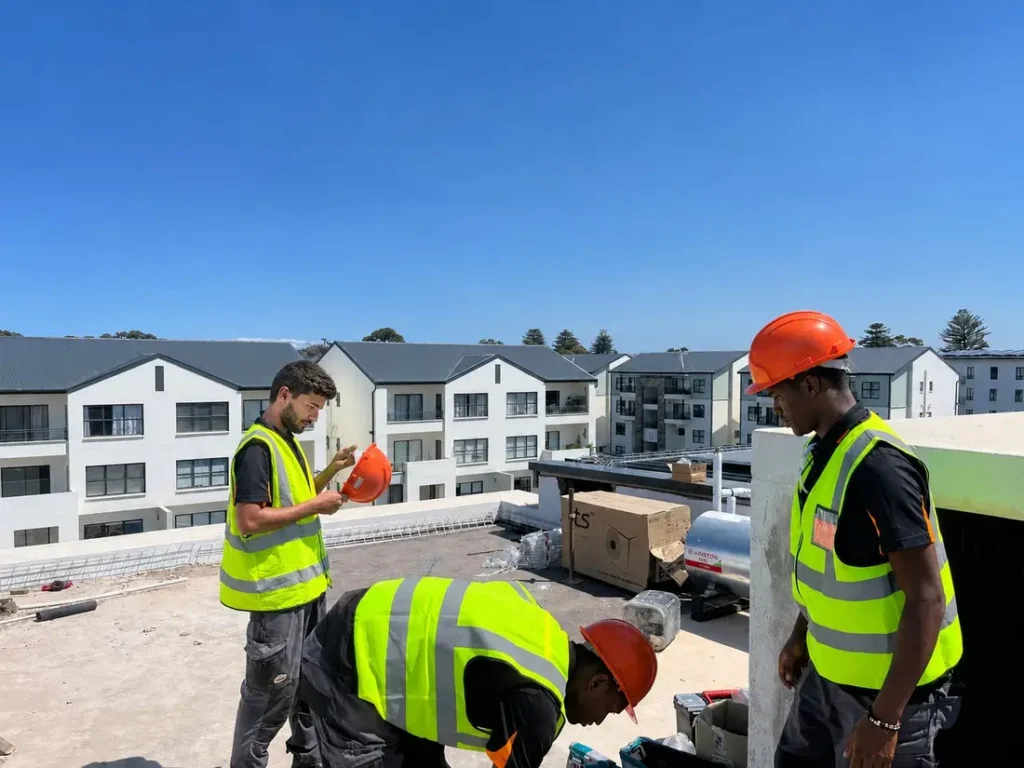
Qualified & Experienced
Our experienced team has the knowledge and practical skills to handle electrical, solar, plumbing and compliance requirements professionally. All our staff are permanent employees.
One Trusted Company
From electrical and solar to plumbing and compliance, we provide multiple property services under one trusted name.
Quality Workmanship
We don’t believe in shortcuts. Every job is completed with attention to detail, safety and long-term reliability. We also offer a one year workmanship warranty on all our work.
Professional & Reliable
We arrive prepared, communicate clearly and work professionally to provide a service you can depend on.
Compliance You Can Trust
From Electrical COCs,Beetle COC’s, Plumbing COC’s to solar, gas and electric fence compliance, we understand the importance of getting it right.
Customer Focused
Whether you’re a homeowner, estate agent, property manager or business, we tailor our service to your requirements. We make the process easy and less stressful for you.
Related Reading
Landlord or selling a property? Read: Electrical Compliance Certificates for Landlords and What Do We Look for During a COC Inspection?.
Certificate Of Compliance By Suburb
We issue Electrical, Plumbing, Gas, Beetle, Electric Fence and Solar COCs across Cape Town. Choose your suburb for local information and booking.
Northern Suburbs
- Bellville
- Big Bay
- Blouberg
- Bloubergstrand
- Brackenfell
- Century City
- Durbanville
- Edgemead
- Epping, Airport Industria & Blackheath
- Goodwood
- Kraaifontein
- Loevenstein
- Melkbosstrand
- Milnerton
- Montague Gardens
- Monte Vista
- Panorama
- Parklands
- Parow
- Plattekloof
- Sunningdale
- Sunset Beach
- Table View
- Welgemoed
- West Beach
- Zevendal
- Zevenwacht
Southern Suburbs
- Belle Constantia
- Bergvliet
- Bishopscourt
- Claremont
- Constantia
- Constantia Heights
- Diep River
- Kenilworth
- Kirstenhof
- Meadowridge
- Mowbray
- Newlands
- Observatory
- Pinelands
- Plumstead
- Rondebosch
- Silverhurst
- Steenberg Estate
- Tokai
- Westlake
- Wynberg
Atlantic Seaboard
- Bakoven
- Bantry Bay
- Camps Bay
- Clifton
- Fresnaye
- Green Point
- Hout Bay
- Llandudno
- Mouille Point
- Scott Estate
- Sea Point
City Bowl
- Devil's Peak Estate
- Gardens
- Higgovale
- Oranjezicht
- Salt River
- Tamboerskloof
- University Estate
- Vredehoek
- Walmer Estate
- Woodstock
Southern Peninsula & False Bay
- Fish Hoek
- Grassy Park
- Kalk Bay
- Lakeside
- Marina da Gama
- Muizenberg
- Noordhoek
- Pelikan Park & Pelican Heights
- Simon's Town
Helderberg & Winelands
Helpful Guides
- Electrical Compliance Certificates for Landlords: What Cape Town Property Owners Need to Know
- Compliance Certificates in Sea Point, Cape Town
- Selling a Property in the South Peninsula? Which Compliance Certificates Do You Need?
- What Compliance Certificates Do I Need When Selling a House in Cape Town?
- Thermo Compliance Cape Town’s Trusted Choice for Compliance Certificates
- How Much Does an Electrical COC Cost in Cape Town?
- What Do We Look for During an Electrical Certificate of Compliance Inspection?
- Why Choose the Right Compliance Company?
More Areas We Issue Certificates Of Compliance In
Thermo Compliance now covers these additional Cape Town, Helderberg and Boland areas, each with its own local guide and instant price estimate.
- Certificate of Compliance Bo-Kaap
- Certificate of Compliance bothasig
- Certificate of Compliance brooklyn
- Certificate of Compliance de-waterkant
- Certificate of Compliance dolphin-beach
- Certificate of Compliance Eden on the Bay
- Certificate of Compliance eerste-river
- Certificate of Compliance eversdal
- Certificate of Compliance firgrove
- Certificate of Compliance flamingo-vlei
- Certificate of Compliance glencairn
- Certificate of Compliance kenridge
- Certificate of Compliance kuils-river
- Certificate of Compliance lansdowne
- Certificate of Compliance macassar
- Certificate of Compliance ottery
- Certificate of Compliance protea-heights
- Certificate of Compliance retreat
- Certificate of Compliance rondebosch-east
- Certificate of Compliance rosebank
- Certificate of Compliance rugby
- Certificate of Compliance scarborough
- Certificate of Compliance Sir Lowry’s Pass
- Certificate of Compliance St James
- Certificate of Compliance sunridge
- Certificate of Compliance three-anchor-bay
- Certificate of Compliance wetton
- Certificate of Compliance zonnebloem