Maximum Energy Efficiency with Thermo Group
At Thermo Group, we are committed to helping residential, commercial, and industrial clients optimise energy efficiency and embrace sustainable energy solutions. Through our comprehensive on-site assessments, we evaluate your property’s electrical systems and energy consumption to identify opportunities for improved performance, reduced operating costs, and increased energy savings. Our tailored recommendations ensure that every solution is designed to maximise efficiency, reliability, and long-term value.
Thinking about solar in Cape Town?
Free solar quotes, no obligation. Installation and City registration handled for you.
Free solar quote · no obligation
Tell us about your home in 5 quick steps
No prices on screen and no pushy sales. We call you back the same day, do a free site assessment, then send an accurate written quote.
Step 1 of 5
Where is the property?
Type of property
What do you need, and how much power do you use?
What are you looking for?
Roughly what is your monthly electricity bill?
Optional: a photo of a recent bill lets us size your system more accurately before we call. Skip this if you do not have one handy.
What must keep running when the power is off?
Tick anything specific you want covered (optional)
How would you prefer to pay?
This only helps us come prepared. You are not committing to anything and no amounts are shown here.
Where should we call you?
Best time to call
Preferred time for the free site assessment
By sending this you agree to our solar quote terms. We use your details only to contact you about this request.
Prefer to talk? Call 021 203 5337 or WhatsApp 082 302 0683
How a Thermo solar installation works
Six clear steps, and you know what you will have in your hands at the end of each one.
We listen first
We start with your electricity bills, what you need kept on during an outage, and your roof. We ask before we recommend anything.
You get: A call back the same dayFree site assessment
We visit the property and look at your roof, distribution board, shading, and where the inverter and battery can safely go.
You get: A clear list of what your property needsWritten quote and design
Equipment, system size, what is included and what is not, and the price including VAT, all in writing. Nothing is guessed.
You get: A quote you can compare line by linePaperwork and planning
We prepare the City of Cape Town application, order the equipment and agree an installation date before anyone is on your roof.
You get: A confirmed date and a simple checklistInstallation and compliance
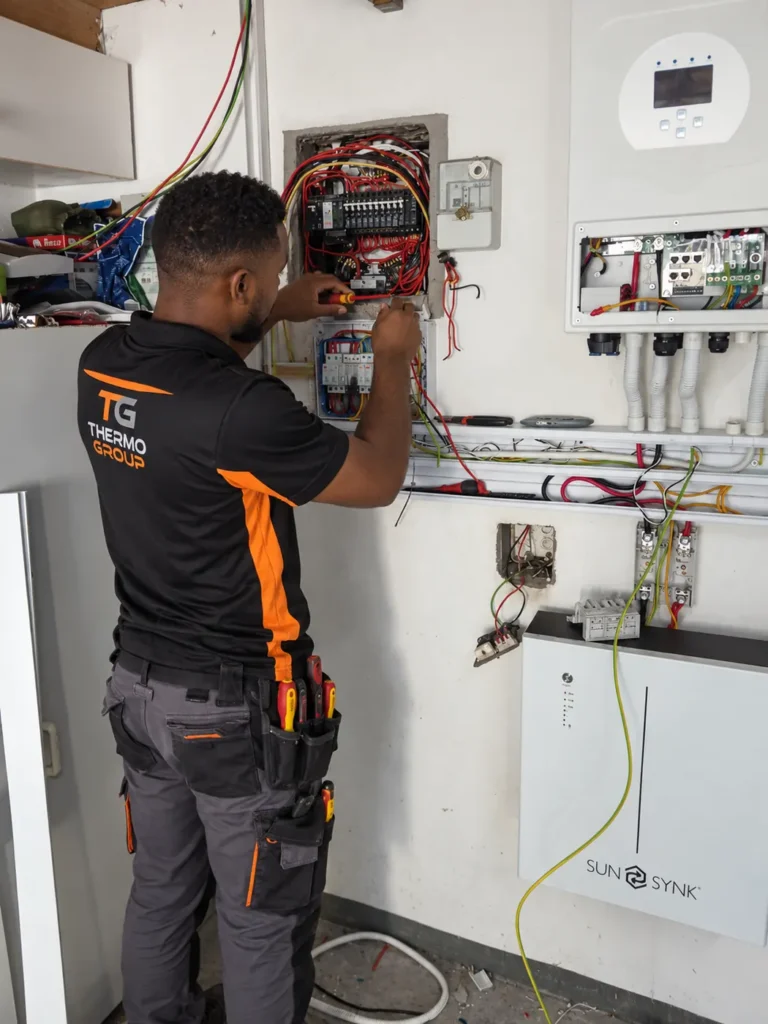
Qualified electricians install the system to the electrical wiring regulations and issue your electrical Certificate of Compliance.
You get: Your Certificate of ComplianceHandover and after-care
We test everything, show you how it works and what to look for, and hand over your paperwork. You can call us afterwards.
You get: A handover pack and a number to callHow we size your system, so it is not a guess
We work from your recent electricity bills, the appliances you want kept running in an outage, and your roof space and direction. Then we show you the working, so you can see why a system is the size it is and check it against any other quote.
What size solar system suits your home?
These are estimated sizes only, so you know what to expect. A full site assessment is needed to give you accurate sizes. We confirm the real design, and the price, at your free site assessment.
| Typical property | System often looked at | What it usually covers in an outage |
|---|---|---|
| Flat or small home, lower use | 3 to 5 kW inverter, 3 to 5 kWp of solar panels and 5 to 10 kWh of battery | Lights, wifi, TV, fridge and a few sockets through an evening outage |
| Family home | 5 to 8 kW inverter, 5 to 8 kWp of solar panels and 10 to 15 kWh of battery | The essentials plus light kitchen use, for most of an evening, depending on what is switched on |
| Larger home, or working from home | 8 to 12 kW inverter, 8 to 12 kWp of solar panels and 15 to 20 kWh of battery | The essentials plus a geyser or aircon on timers, if the loads are managed |
| Large home or small business | 12 to 15 kW inverter or more, 12 to 16 kWp of solar panels and 20 to 30 kWh of battery, often custom designed | Bigger loads and longer backup, designed after a site assessment |
These are indications only. Real systems depend on your bills, your roof and what you need kept on. We never quote from a table.


Operating Expertise
On-Site Energy Assessments
Our comprehensive on-site assessments evaluate your property’s energy usage and identify opportunities to improve efficiency and reduce operating costs. From lighting upgrades to complete electrical and solar solutions, we provide tailored recommendations designed to maximise long-term savings and performance.
Energy-Efficient Lighting Solutions
Upgrade your property with high-performance LED lighting systems that reduce energy consumption, lower maintenance costs, and improve illumination. Our team designs and installs customised lighting solutions for residential, commercial, and industrial applications, ensuring optimal efficiency and reliability.
Comprehensive Energy Audits
Our professional energy audits provide a detailed analysis of your property’s energy consumption, highlighting inefficiencies and recommending practical solutions to improve performance. By identifying areas for optimisation, we help clients reduce electricity costs and make informed investment decisions.
Professional Solar PV System Installations
Harness the power of renewable energy with our expertly designed and installed solar photovoltaic (PV) systems. Whether for residential, commercial, or industrial applications, we deliver turnkey solar solutions tailored to your energy requirements. From initial consultation and system design to installation and commissioning, our focus is on providing reliable, efficient, and long-lasting solar systems that maximise savings and energy independence.
As trusted solar contractors serving Cape Town, our qualified solar installers provide dedicated solar panel maintenance and PV system maintenance plans, so your investment keeps performing at its best for years to come.
Harness Solar Energy
Residential Solar Installations
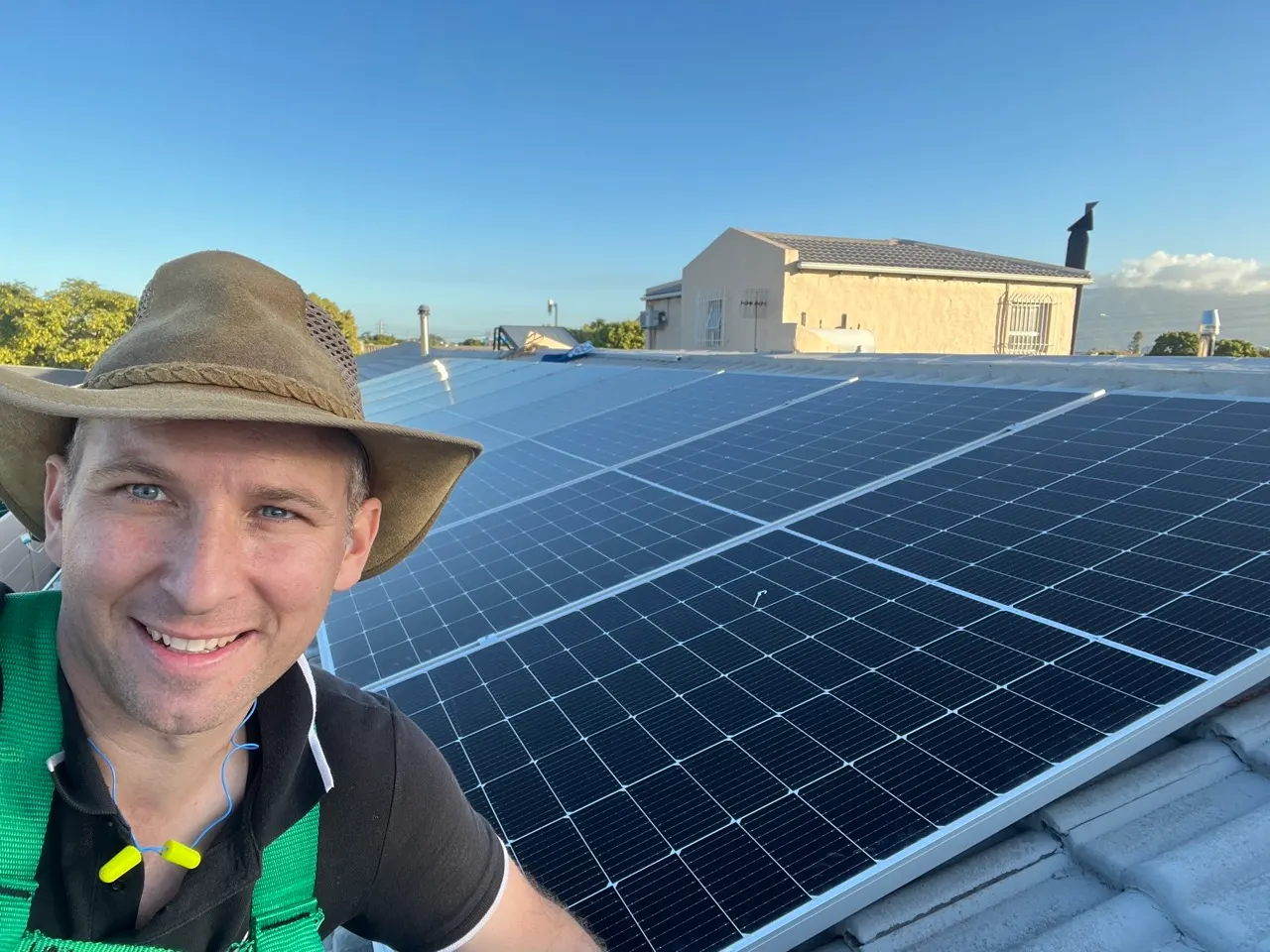
Take control of your energy future with our professional Residential Solar Installation Services. Thermo Group designs and installs high-quality solar photovoltaic (PV) systems throughout the Western Cape and tailored to your home’s energy needs, helping you reduce electricity costs, increase energy independence, and protect against rising utility prices. Our experienced team delivers reliable, efficient, and compliant installations using trusted equipment to provide long-term performance and peace of mind.
Commercial Solar Installations
Reduce your energy costs and gain greater control over your power supply with our professional Commercial Solar Installation Services. At Thermo group, we design and install high-performance solar energy systems tailored to your business’s unique needs, helping you lower electricity expenses, improve energy independence, and achieve your sustainability objectives. From initial consultation to commissioning, our expert team delivers reliable, efficient, and future-ready solar solutions built to maximise long-term return on investment.
Solar System Maintenance and Repairs
Protect your solar investment with our comprehensive Solar System Maintenance Services. At Thermo Group, we provide professional inspections, preventative maintenance, performance testing, panel cleaning, fault diagnosis, and repairs to ensure your solar system operates safely, efficiently, and at peak performance all year round. Our proactive approach helps maximise energy production, extend equipment lifespan, and minimise costly downtime. System not performing, tripping, or showing an inverter error code? Visit our Solar Repairs & Fault Finding page for a full diagnostic. Constantia homeowner? See our dedicated Solar Maintenance & Repairs Constantia page. In Somerset West or Paardevlei? See our dedicated Solar Maintenance & Repairs Somerset West page. In Table View or Blouberg? See our dedicated Solar Maintenance & Fault Finding Table View & Blouberg page. In Century City or Milnerton? See our dedicated Solar Maintenance & Fault Finding Century City & Milnerton page. Hout Bay homeowner? See our dedicated Solar Maintenance, Fault Finding & Repairs Hout Bay page.
How to Size a Solar System for Your Cape Town Property
Most confusion around quotes comes from three units that sound alike. Panels are rated in kWp, the peak DC output under test conditions. The inverter is rated in kW (or kVA), the power it can deliver at one moment. The battery is rated in kWh, the energy it stores. A good design balances all three against how you actually use electricity.
Sizing starts with data, not a rule of thumb. We work from twelve months of municipal bills or your smart meter history, then split consumption into daytime and evening or night use. A household that is out all day and cooks and bathes in the evening needs a different design from a home office or a shop that runs from eight to five.
- Find the big loads. Electric geysers, stoves, pool pumps, air-conditioning and EV chargers dominate most bills. Sometimes the cheapest saving is a timer or a solar or gas geyser conversion before any panels go up.
- Match panels to daytime use and available roof. Daily production is roughly panel kWp multiplied by the equivalent full-sun hours at your site, less system losses. Design software uses local irradiance data, orientation and shading to do this properly.
- Size the inverter to your peak, not your average. Add up what could run at the same time, and allow for motors that draw a surge when they start, such as pumps and compressors.
- Size the battery to the loads you want kept alive and for how long (covered below).
- Check the supply limits. The City ties limits on inverter size and export to your main circuit breaker and whether you have a single-phase or three-phase supply.
Be wary of anyone who quotes without asking about your bills, your roof and your evening routine. Cape Town winters bring shorter days and cloud fronts, so a design based only on summer figures will disappoint in July. Ask to see the winter estimate as well as the annual one, or request a free quote and we will walk through your usage with you.
Grid-Tied, Hybrid or Off-Grid: Which System Suits You?
The right system depends on what you want solar to do: cut daytime consumption, keep the lights on when the grid fails, or both. The table summarises the three configurations, and the City of Cape Town position matters as much as the technology.
| System type | What it does | Battery | When the grid goes down | City of Cape Town position |
|---|---|---|---|---|
| Grid-tied (no battery) | Runs your loads from the panels by day and tops up from the grid | None | Shuts down automatically (anti-islanding), so the house is without power | Needs City authorisation before it is switched on |
| Hybrid (grid-tied with battery) | Solar by day, battery for evenings and outages, grid as the safety net | Yes | Powers a protected essential-loads circuit through an interlocked changeover arrangement | Treated as grid-tied and needs City authorisation |
| Off-grid or standby | Runs the property independently of the municipal supply | Yes, sized for several days of autonomy | Not applicable | The City is no longer accepting applications for standby and off-grid systems inside its supply area |
Two points are worth spelling out. First, a grid-tied inverter without a battery cannot keep you running in a power cut. That is a safety feature, because it stops your panels feeding power back into a line that municipal staff may be working on. Second, the City’s published requirements explain why it stopped accepting standby and off-grid applications: many systems described that way were wired in a way that let them operate in parallel with the grid. Any quote that avoids registration by calling a system “off-grid” deserves a hard look.
For most Cape Town homes and small businesses, a hybrid system is the practical answer when load-shedding or outages are the concern, and a grid-tied system suits a daytime operation that does not need backup. Properties outside the City’s supply area, and genuinely remote sites, have different rules, which is where our farm solar work comes in.
Solar Battery Installation in Cape Town: Types and Sizing for Load-Shedding
Home batteries are mostly either lithium iron phosphate (LiFePO4) or lead-acid. Lithium iron phosphate generally allows a deeper usable discharge, a longer cycle life, lower weight and built-in battery management, which is why it dominates new installations. Lead-acid is usually limited to a shallower discharge to protect its life and may need ventilation and regular checks. Read the manufacturer’s data sheet for usable capacity and cycle life, because the headline kWh on a label is not what you can actually draw.
Working out the battery you need
- List the essential loads. Typically lights, fridge and freezer, Wi-Fi router, TV, laptops, phone chargers, gate motor and perhaps a security system. Leave the geyser, oven and pool pump off the backed-up circuit.
- Add up their power and the hours. A rough guide is essential-load kW multiplied by the hours you want covered gives kWh needed, before allowing for usable capacity and inverter losses.
- Allow for repeat outages. A battery that is flat by evening on a cloudy winter day cannot ride out an evening outage, so size for the worst week, not the best.
- Check the inverter can start your motors. A battery big enough for the hours is useless if the inverter trips when a fridge compressor or pump kicks in.
Safe installation
Batteries store a lot of energy. The City’s guidance says to keep them in a properly racked, dry, well-ventilated area, and we add that they belong away from direct sun, escape routes and flammable storage. Battery circuits need the right DC protection and isolation, and your distribution board may need splitting or upgrading so the essential loads sit on their own protected circuit.
The City limits battery charging current relative to your main breaker, and requires a new application if you later change or expand an authorised system, so tell us up front if you plan to add batteries later. For a battery system that has stopped behaving, see our solar repairs and fault finding service.
Our Solar Installation Process, From Site Visit to Commissioning
Knowing what happens in what order lets you spot a rushed or incomplete job. A properly run installation looks like this:
- Briefing and bill review. We look at your usage, your goals (savings, backup or both) and any body corporate or estate rules.
- Site visit. We inspect the roof or ground area, structure, shading, distribution board, earthing, cable routes and where the inverter and batteries can go safely, and check your supply phase and main breaker size.
- Design and written quote. You receive a design, equipment schedule, scope and exclusions (see the quote checklist below).
- Approvals and registration. The City authorisation is applied for before installation. Estates and sectional-title schemes may also need trustee or HOA approval first.
- Permission to install. Work only starts once the City’s written permission is in hand. Panels can go up, but the system stays switched off.
- Installation. Mounting structure and panels, DC cabling and isolation, inverter and battery installation, AC wiring, earthing, surge protection, labelling and any distribution board work.
- Testing and Certificate of Compliance. The electrical installation is inspected and tested and a Certificate of Compliance is issued. See our page on solar certificates of compliance.
- Commissioning documentation. The commissioning report, circuit diagram and COC go to the City for sign-off, along with the supplemental contract the City requires.
- Commissioning approval and switch-on. Only after the City issues its commissioning approval is the system switched on permanently. Metering changes happen as part of this stage where they apply.
- Handover. You get the paperwork, manuals, warranty documents, monitoring set-up and a walk-through of how the system behaves in an outage.
Switching on before approval is a tempting shortcut, but it exposes you to penalties and can cause trouble with insurers and at property transfer. We register first and switch on after approval.
City of Cape Town SSEG Registration: What You Need to Know
If your property is in the City of Cape Town’s electricity supply area, a solar PV and/or battery system that connects to your installation must be authorised by the City before it is installed and switched on. The City calls this small-scale embedded generation, or SSEG. Since 1 October 2023 all new solar PV and battery systems are treated as grid-tied for this purpose. Registration is free; the City’s published position is that a fee applies only if you fail to register.
How the process works
- Online application. The application is made through the City’s e-Services portal. The property owner, electrical contractor, installer and an ECSA-registered professional all take part, and an owner can authorise the installer to apply on their behalf.
- Approved equipment only. Grid-tied inverters must be on the City’s approved inverter list. A manufacturer’s own declaration is not accepted.
- Permission to Install (PTI). The system may be installed, but may not be switched on.
- Commissioning. After installation, the electrical Certificate of Compliance, commissioning report and signed supplemental contract are submitted, and an ECSA-registered professional signs off the commissioning report.
- Commissioning letter. Only once this is issued may the system be switched on.
Metering and tariffs
The metering you end up with depends on whether you export. A system that feeds power back to the grid needs an advanced (AMI) meter, which the City fits at the owner’s cost. A system that blocks export with reverse-power-flow protection is still registered as grid-tied, and for most homes the City fits a prepayment meter at its own cost. Credits for exported energy and the charges that apply change with each financial year’s tariff approval, so we keep our Home User tariff guide up to date rather than quoting figures here.
Why registration matters
The City’s requirements are clear that holding only a COC does not authorise a connection. Generating without commissioning approval can bring a contravention notice, a service fee and, ultimately, disconnection of your supply. When a property changes hands, the new owner must sign a new supplemental contract, and if the system was never authorised they must either authorise it or decommission it. Buyers and their conveyancers increasingly ask for the paperwork.
Supplies above 100 A, blocks of flats and group developments (assessed case by case), properties supplied by Eskom or another municipality, and later expansions all complicate an application. Rules and forms change, so we confirm the current requirement before every submission. Thermo Group handles SSEG registration as part of its solar installations.
Roof Types, Mounting, Orientation and Cape Town Wind
Roof type and structure
- Corrugated iron, IBR and concrete-tile roofs are the most common. Metal roofs usually take clamps or brackets fixed to the structure, and tiled roofs use hooks that go beneath the tiles.
- Flat roofs use tilt frames that are ballasted or fixed through the waterproofing, and every penetration must be sealed.
- Ground mounts and carports suit large properties, farms and commercial yards, and are structural jobs in their own right.
- Asbestos-cement roofs need specialist advice before any work. Asbestos regulations restrict drilling and fast-moving cutting tools on this material, so do not let anyone drill or walk on a roof that may contain it.
- Thatch is generally unsuited to rooftop panels because of fire risk.
The City’s going-solar guidance says to confirm that your roof can carry the weight and wind load of the array. That means checking the age and condition of the covering and timbers, and replacing an old roof before you install, not after.
Wind and salt
Cape Town’s south-easter is the main design consideration for mounting. Panels act like sails, so rails, clamps and fixings need correct spacing and torque, and the roof structure must be sound where they connect. Near the sea, such as Sea Point, salt spray makes corrosion-resistant fasteners and fittings a sensible requirement. On a pitched roof we prefer flush mounting to tilting panels up, as the extra wind exposure is rarely worth the small gain.
Orientation, tilt and shading
In the southern hemisphere, north-facing panels generally give the best annual output. East- and west-facing arrays still work well and spread production across the day, which suits morning and afternoon peaks. South-facing roofs are poor candidates unless the array can go elsewhere.
Shade matters more than most people expect. A chimney, vent pipe, tree, neighbouring building or satellite dish can reduce a whole string’s output, depending on how the panels are wired. We check shade at different times of day and design the layout around it. In hillside suburbs such as Constantia and Durbanville, shading from slopes and mature trees is common.
Finally, building plans are usually not needed for panels mounted close to a roof, but raised frames, taller ground mounts, estate design rules and heritage controls can change that. Raise it early with your installer, homeowners’ association or body corporate.
Certificates of Compliance and Insurance for Solar Systems
Every solar installation is an electrical installation, so it needs an electrical Certificate of Compliance (COC) from a registered person. The COC confirms that the work was tested and complies with the wiring regulations. The property owner carries legal responsibility for the safety of the electrical installation, so keep the paperwork safe. Our guides to solar COCs and the general electrical certificate of compliance explain what is tested.
A COC and City registration are not the same thing. The COC shows the installation is safe, while the City’s authorisation is what allows it to connect to the network. You need both for a grid-tied or hybrid system.
Insurance is the other half. Tell your insurer once the system is installed so your policy schedule includes it, and ask them whether panels, inverters and batteries are covered for theft, lightning and fire. Insurers commonly ask for proof of a valid COC after a claim, and many want to see that the work was done by a competent installer, so keep your COC, invoices, equipment details and commissioning paperwork together. If something goes wrong after unregistered or uncertified work, you risk a rejected claim. Landlords and body corporates often ask for the same documents.
If your existing installation is old, we may need to correct earthing, replace a tired distribution board or add surge protection before a COC can be issued. Better to know that at quote stage.
Commercial and Industrial Solar in Cape Town: What to Consider
Commercial solar runs on different economics from home solar. The question is how much of your daytime consumption you can cover and how that changes your bill. Factories, warehouses, offices, schools, cold stores and shops tend to use most of their energy while the sun is up, which suits solar well.
What we look at for a business
- Load profile. Consumption data set against your trading hours, shifts and weekend use. A flat daytime load is ideal.
- Tariff structure. Many City business tariffs combine energy charges, time-of-use periods and a charge based on peak demand (kVA). Solar reduces energy purchased during the day, but it does not guarantee a lower peak demand charge, because a cloudy spell can coincide with your highest load. Batteries can help with that, but they add cost and complexity.
- Roof or land. Roof age and structure, any asbestos, access and fall protection, ground-mount or carport options, and space for inverters and switchgear.
- Supply size and approvals. The City’s requirements put supplies above 100 A on a different technical footing, and larger systems may need engineering studies.
- Export or zero export. Exporting needs an AMI meter and brings its own tariff, while a zero-export design uses reverse-power-flow protection. The better choice depends on how much surplus you would really have.
Payback without the hype
Simple payback is the net installed cost divided by the annual saving. What moves the answer is the share of your consumption that solar covers, your tariff, panel degradation, maintenance, whether batteries are included, and tax treatment. Section 12B of the Income Tax Act has offered business owners a tax deduction on qualifying solar PV, but the rate and conditions have changed in recent years and depend on who owns the system, so check the current position with your accountant. Ownership, rent-to-own and power purchase agreements each carry different cost, risk and tax outcomes.
Landlords and tenants need to agree who pays for, owns and benefits from a system, and a lease may restrict roof alterations. Our solar for property developers and farm solar pages cover developments and agricultural sites, and our electricians can handle any upgrades needed first.
What a Good Solar Quote Should Include, and Red Flags to Watch For
A quote is the cheapest place to find problems. Use this list to compare any quote, ours included.
A proper quote shows
- Make, model and quantity of the panels, inverter and batteries, with the battery’s usable capacity and chemistry.
- System size in kWp, inverter size in kW, and battery capacity in kWh.
- Confirmation that the inverter is on the City’s approved list.
- The mounting structure type, and whether the roof and wind load have been assessed.
- Cabling, DC isolation, protection, surge protection, earthing and any distribution board work.
- What is backed up in an outage.
- Whether City registration and the electrical COC are included, and who does them.
- Monitoring set-up, handover documents and who to call if something fails, with warranty terms in writing.
- Exclusions, payment schedule and what happens if the City asks for changes.
Red flags
- No site visit, or a quote based on a photo of your bill.
- A price that is vague about brands, or kit described only as “premium” or “equivalent.”
- Registration described as optional, or “off-grid” used as a way around it.
- No mention of a COC, or an installer who cannot show who is legally responsible for signing it off.
- Pressure to pay in full upfront or decide today.
- No mention of the roof, wind, shading or your distribution board.
- Promises of a zero bill, or battery runtimes with no reference to what you will be running.
The City suggests asking installers for references to previous City-authorised installations, proof of Certificates of Compliance, and evidence that the people doing the wiring hold the required registrations. Ask the same of us. We offer free quotes with no call-out fee and no obligation. Call 021 203 5337 or use our quote request form.
Solar Maintenance and Panel Cleaning in Cape Town
Solar systems have few moving parts, but they are not set-and-forget. Cape Town’s dry summers leave dust and bird droppings on the glass, coastal areas add salt, and winter rain helps but does not clean everything. Heavy soiling cuts output, and the best test is your inverter app: if clear-day production drops against comparable days, check the panels and system before blaming the sun.
Cleaning
- Clean early in the morning or in the evening when the glass is cool.
- Use clean water, a soft brush or cloth and mild soap if needed. Avoid pressure washers, abrasive pads and harsh chemicals, which can damage the anti-reflective coating.
- Never stand on the glass, and do not climb steep or high roofs without fall protection. This is where professional panel cleaning earns its fee.
An annual system check
We suggest a yearly inspection, and after major wind storms for exposed sites. It should cover clamps and fixings, DC connectors and cabling, isolators and breakers, inverter ventilation and error history, earthing and surge protection, battery condition, battery room ventilation, and a test of the changeover in an outage. Firmware updates and monitoring checks belong in the same visit. Our solar maintenance service covers this, and our repairs and fault-finding team can trace tripping, error codes and underperformance. If your earth leakage keeps tripping after a solar install, tell us, as it can point to a wiring or insulation fault that should not be ignored.
Credentials, PV GreenCard and Financing Your Solar System
Credentials to look for
Thermo Group is an ECA (Electrical Contractors’ Association of South Africa) member, a SAPVIA member and holds PV GreenCard. SAPVIA is the industry association for solar PV in South Africa. It is a member-led body rather than a regulator, so membership shows industry involvement and does not replace the legal requirements.
PV GreenCard is a quality assurance and training programme for solar PV installers, run through SAPVIA. When a certified company finishes an installation it issues the owner a PV GreenCard as-built report, which records the design and equipment. It is voluntary, and the programme states that it is not a substitute for the electrical COC, which only a registered electrician can issue. You can check a company against the PV GreenCard website. The City also suggests checking an installer’s registration with the Electrical Contractors Board and SAPVIA, which it describes as voluntary but recommended.
Financing, in general terms
The right way to pay depends on your cash position, tax situation and how long you will own the property.
- Cash purchase. Simple, with no interest cost.
- Home-loan access. This ties the system to your property finance.
- Instalment or asset finance. Common for businesses, where ownership and tax treatment need care.
- Rent-to-own or lease. Lower upfront outlay, but compare the total cost over the term.
- Power purchase agreements. For some commercial sites, where a third party owns the system and sells you the energy.
Whatever the route, compare the total you will pay, the interest rate and fees, who owns the system, what happens if you sell, and the later cost of maintenance and battery replacement. We can provide a clear written quote to take to your own finance provider. When you are ready, contact Thermo Group or request a quote.
Why Choose Thermo Group?
Experienced and Certified Professionals
Our team is composed of seasoned licensed electricians and Solar experts who have gathered a lot of experience in installing various solar systems and energy solutions.
High-Quality Products
We partner with trusted, industry-leading manufacturers to supply premium-quality solar panels, inverters, batteries, and system components. By using only proven and reliable products, we ensure every installation delivers exceptional performance, long-term durability, and maximum return on your investment.
Customized Solutions
We provide customised solar and electrical solutions tailored to your unique energy requirements, operational needs, and budget. Our team works closely with you to design a cost-effective system that delivers maximum efficiency, long-term value, and the best possible return on your investment.
Competitive Pricing and Financing Options
We offer competitive pricing and flexible financing solutions to make the transition to solar energy more affordable and accessible. Our goal is to provide cost-effective renewable energy systems that deliver long-term savings without compromising on quality or performance.
Exceptional Customer Service
At Thermo group, customer satisfaction is our highest priority. We are committed to building lasting relationships by delivering exceptional workmanship, transparent communication, and dependable service. From the initial consultation and system design through installation, commissioning, and ongoing maintenance, our experienced team provides expert support at every stage, ensuring a seamless and hassle-free experience for every client.
EXCELLENT Based on 54 reviews
 Posted on Google
 Natalie George6 October 2026Alfred and Yusuf were absolutely amazing checking and redoing our electrics. Alfred made the effort to keep us in the loop at all times and went above and beyond to resolve issues. The team were considerate of us working from home but still very quick and efficient. I would not hesitate to recommend them.Posted on Google
 Janice Stichini5 October 2026On 24 September 2026 Russel and his team (Ebrahim, Michael and Alfred) visited us and went through the various areas of their expertise. We found them to be very pleasant and knowledgeable in their respective fields. It was a real pleasure having them carry out the COC.Posted on Google
 Trish Williams4 October 2026Excellent service!! used good quality products. Will definitely use this company again.Posted on Google
 Kim Squair1 October 2026The team (Alfred, P and Vuso) arrived early, listened and asked questions to understand the problem, then set about investigating and resolving the problem including those little things that needed doing. Knowledgeable capable and professional. Feel comfortable in using their services. Next time I need an electrician I'll be calling them.Posted on Google
 kirsten daniels29 September 2026Thank you to Yusuf and P for an excellent job!! So helpful!Posted on Google
 Marleen La Grange29 September 2026Excellent service and arrangements from Thermoelectrics. After 6 months Michael and Pato came to my rescue again due to a breaker problem after the power outage on 28.9.2026. The team are very proffessional, friendly and efficient and can be definately be recommended.Posted on Google
 Christo Jacobs18 September 2026Awesome Service Great workPosted on Google
 John Afordofe2 September 2026The team at Thermoelectrics were fantastic! My Company used them for electrical work and COC. The communication, co-ordination and efficiency from Nikita was superb. The onsite team of P, Emile and Warwick were diligent and professional. They were in good spirits despite going the extra mile to get the job done. Highly recommend Thermo for your needs.Posted on Google
 Mark De Villiers26 August 2026Today once again, i had to make use of yor services. A shoutout to Warwick, Russell and Emielle for your expert advice and speedy responce to sort out our power problems, you went over and above what i had expected.....Best service ever, from the very professional assistant who took our call, calmed us and got a team to site within a short period of time to the very competent and highly skilled team who came out and worked till late in the evening to ensure that we had power. I have no hesitation in recommending Thermoelectrics and will definitely use them going forwardPosted on Google
 Yazeed Abrahams29 June 2026Thermo Electrics’ team of Phato, Yusuf and Keenan were fantastic. They tried keeping me calm and were very reassuring the entire time. They are efficient and together with Warwick and Luke sorted out my issue with the utmost efficiency, friendliness and professionalism. Will recommend Thermo Electrics to everyone!!
Ready to Go Solar?
Enter a greener future with Thermo group. Please reach out now for a consultation, and get to know how our solar solutions can benefit you.
Areas In Cape Town We Service
- Northern Suburbs Cape Town
- Southern Suburbs Cape Town
- Atlantic Seaboard Cape Town
- Southern Peninsula Cape Town
- City Bowl Cape Town
- Helderberg and Winelands Cape Town
- Bakoven
- Bantry Bay
- Bellville
- Bergvliet
- Big Bay
- Bishopscourt
- Blouberg
- Brackenfell
- Camps Bay
- Century City & Milnerton
- Claremont
- Clifton
- Constantia
- Durbanville
- Edgemead
- Fish Hoek
- Fresnaye
- Gardens
- Goodwood
- Green Point
- Higgovale
- Hout Bay
- Kalk Bay
- Kenilworth
- Kraaifontein
- Llandudno
- Loevenstein
- Marina Da Gama
- Melkbosstrand
- Montague Gardens
- Monte Vista
- Mouille Point
- Muizenberg
- Newlands
- Noordhoek
- Observatory
- Oranjezicht
- Paarl
- Panorama
- Parklands
- Parow
- Pinelands
- Plattekloof
- Plumstead
- Rondebosch
- Sea Point
- Simon's Town
- Somerset West
- Stellenbosch
- Sunningdale
- Sunset Beach
- Tamboerskloof
- Tokai
- Vredehoek
- Welgemoed
- West Beach
- Woodstock
- Wynberg
Solar Installations By Area
We install solar PV, battery and hybrid systems across Cape Town, with dedicated pages covering our work in each area:
Solar Installations, By Area
- Solar Installations Durbanville
- Solar Installations Hout Bay
- Solar Installations Century City & Milnerton
- Solar Installations Table View & Blouberg
- Solar Installations Somerset West
- Solar Installations Constantia
- Solar Installations Simon’s Town
- Solar Installations Melkbosstrand
- Solar Installations Fish Hoek
- Solar Installations Bergvliet
- Solar Installations Muizenberg
- Solar Installations Sea Point
- Solar Installations Camps Bay
- Solar Installations Sunningdale
- Solar Installations Parklands
- Solar Installations Claremont
- Solar Installations Rondebosch
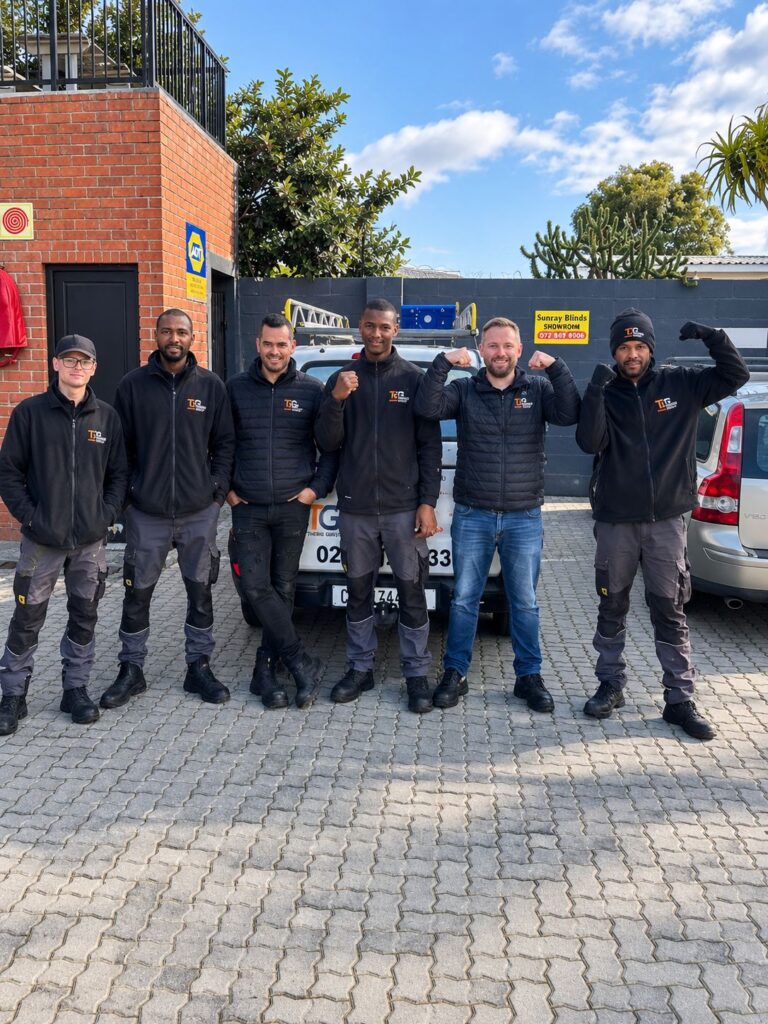
Thermo Group proudly serves homeowners, businesses, and property managers throughout Cape Town, including Cape Town City Centre Bishopscourt, Constantia, Camps Bay, Clifton, Bantry Bay, Sea Point, Green Point, Newlands, Pinelands, Claremont, Rondebosch, Hout Bay, Fish Hoek, Noordhoek, Simons Town, Durbanville, Plattekloof, Edgemead, Century City, Bloubergstrand, Stellenbosch, Somerset West, Strand and surrounding areas.
Related Reading
Curious what the installation process actually involves? Read our step-by-step guide: Solar Panel Installation in Cape Town: What to Expect.
Solar Installations Cape Town: Frequently Asked Questions
Yes, if your property is in the City’s electricity supply area. Solar PV and battery systems connected to your installation must be authorised before they are installed and switched on, and registration itself is free. Operating without approval can bring a contravention notice, a service fee and possible disconnection. Areas supplied by Eskom or another municipality follow their own process.
No. The City first issues a Permission to Install letter, which lets the system be installed but not switched on. After installation, the Certificate of Compliance, commissioning report and signed contract are submitted, an ECSA-registered professional signs off, and only then does the City issue the commissioning letter allowing you to switch on.
Only if it includes a battery and a hybrid inverter set up with a backed-up circuit. A grid-tied system without a battery shuts down automatically when the grid fails, as a safety measure, so you will have no power. Hybrid systems can supply the circuits you choose to protect, such as lights, fridge, Wi-Fi and gate motor.
Start with the loads you want running in an outage and how many hours you want to cover. Multiply their combined power by the hours, then allow for usable capacity, inverter losses and a cloudy winter day. Leave the geyser, oven and pool pump off the backed-up circuit. The inverter must also be able to start motors such as pumps and fridges.
There is no honest answer without your usage data. We look at twelve months of electricity bills, how much you use during the day compared with the evening, your roof area, orientation and shading, and the limits the City places on your supply. Panels are then sized to cover daytime use, with the inverter and battery sized separately.
Inside the City’s supply area, no. The City says it no longer accepts applications for standby and off-grid systems because of the safety risks, and treats all new solar and battery systems as grid-tied. Systems authorised before 1 October 2023 remain valid. Remote properties outside the City’s supply area, such as some farms, are a different matter.
Yes. A solar installation is an electrical installation, so a registered person must test it and issue an electrical COC. It confirms the work meets the wiring regulations. It is separate from City registration: the COC proves safety, while the City’s authorisation allows the connection. Your insurer may ask for the COC after a claim.
Yes. Tell your insurer once the system is installed so the panels, inverter and batteries are added to your policy, and ask what is covered for theft, lightning and fire. Keep your COC, invoices, equipment details and commissioning paperwork. Insurers can ask for proof that the installation is compliant, and unregistered or uncertified work puts a claim at risk.
PV GreenCard is a voluntary industry quality assurance programme for solar PV installers, run through SAPVIA. When a certified company completes an installation it issues the owner a PV GreenCard as-built report recording the design and equipment. It does not replace the electrical COC, which only a registered electrician can issue. Thermo Group holds PV GreenCard.
Properly designed and installed panels are built to handle wind, but the fixings, rail spacing and roof structure must be right. Cape Town’s south-easter is why we assess the roof and check clamp spacing and torque, and why we prefer flush mounting where possible. Near the sea we also use corrosion-resistant hardware. Annual checks catch loose fixings early.
Usually yes, but the City requires a new application for any change or expansion of an authorised system, and your existing inverter must be able to support the addition. Adding a battery to a grid-tied system generally means a hybrid inverter or an additional battery inverter, plus a changeover arrangement. Tell us what you have and we will advise.
Yes. Businesses look at daytime load profiles, time-of-use tariffs, peak demand charges, roof structure, supply size and who owns the building. Supplies above 100 A come under different City technical requirements, and larger systems may need engineering studies. Payback depends on how much of your consumption solar covers, your tariff, maintenance and tax treatment, so each site is assessed individually.
Fill Out Form Below And We Will Contact You Back





Helpful Guides
- Solar Panel Installation in Cape Town: What to Expect, Step by Step
- Why Your Backup Power System Needs a Spring Health Check
- The Business Case for Solar Power
- The Importance of Regular Cleaning of Solar Panels: Maximize Efficiency and Longevity
- Smart Energy Management: How Thermo Group is Leading the Charge
- Unlocking the Potential: How Thermo Group’ Solar Solutions Are Redefining Urban Landscapes
- Beyond the Grid: Empowering Remote Communities with Solar Energy Solutions
- From Light to Power: How Solar Panels Are Revolutionizing Energy Consumption
- Harnessing the Sun: Unveiling the Future of Solar Power Integration
Solar Installation Outside Cape Town
We also design and install solar and battery systems in towns across the Western Cape. Choose your town for local information:
West Coast & Swartland
- Solar Installation Yzerfontein
- Solar Installation Langebaan
- Solar Installation Calypso Beach
- Solar Installation Darling
- Solar Installation Malmesbury
Boland & Breede Valley
- Solar Installation Wellington
- Solar Installation Worcester
- Solar Installation Robertson
- Solar Installation Montagu
Overberg & Kogelberg Coast
Solar Installations For Estates, Industrial Areas And Farm Areas
Beyond our suburb pages, we install solar for estates, commercial and industrial premises and farm areas across Greater Cape Town.
- Solar Installations airport-industria
- Solar Installations atlantic-beach-golf-estate
- Solar Installations atlantis
- Solar Installations blackheath
- Solar Installations brackengate
- Solar Installations croydon
- Solar Installations durbanville-hills
- Solar Installations epping
- Solar Installations heldervue
- Solar Installations killarney-gardens
- Solar Installations klapmuts
- Solar Installations lourensford
- Solar Installations paarden-eiland
- Solar Installations pearl-valley
- Solar Installations philippi-horticultural-area
- Solar Installations royal-ascot
- Solar Installations stikland
- Solar Installations val-de-vie
- Solar Installations waterstone