

Thermo Group — Emergency Electricians For Camps Bay
Power out, a distribution board that won’t stop tripping, or a burst geyser element flooding the ceiling? Thermo Group sends qualified, insured emergency electricians to Camps Bay for fast, safe fault repairs — day or night.
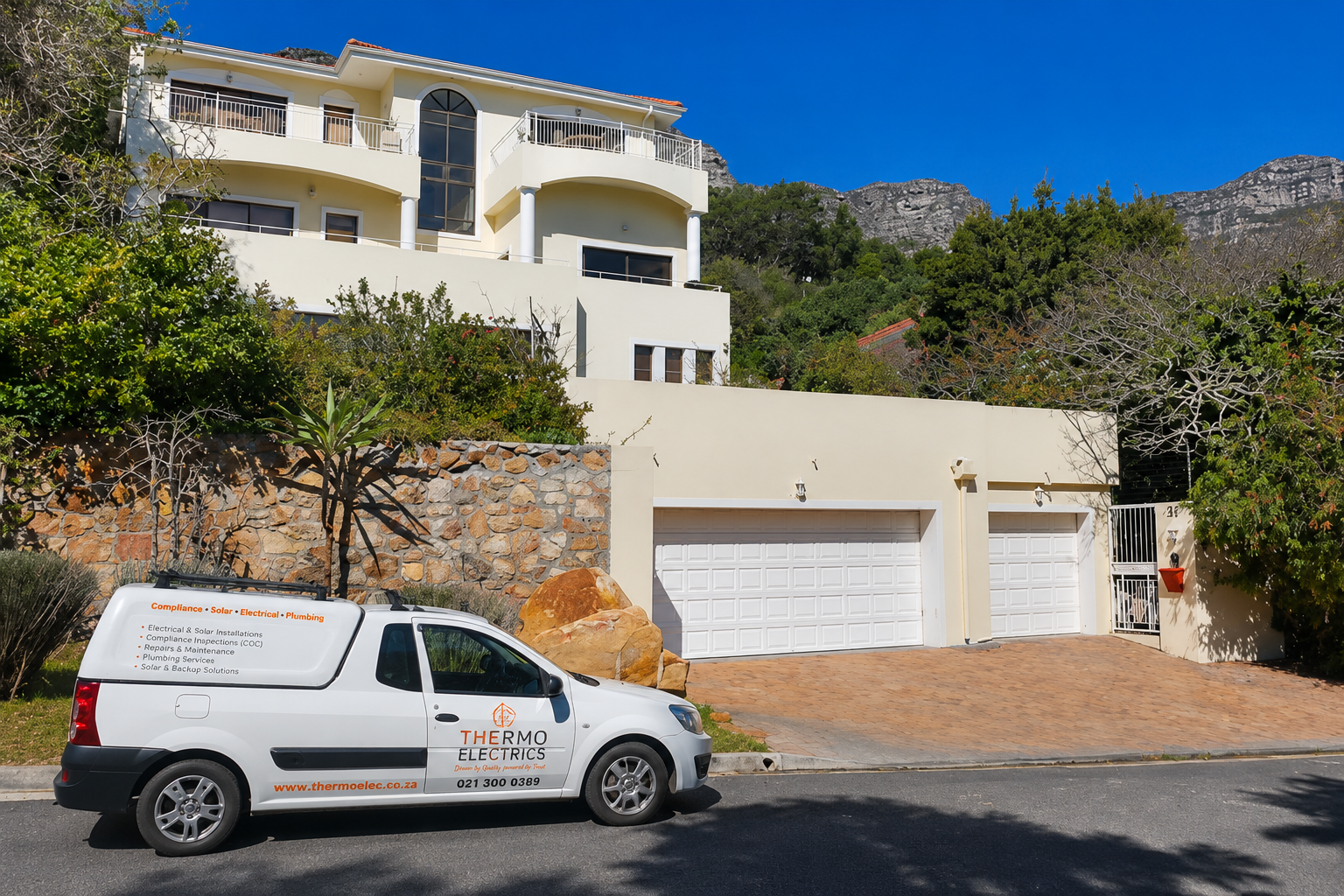
We know Camps Bay’s steep driveways, gated properties and beachfront apartment access, so we’re not fumbling around when every minute counts during an electrical emergency.
Need an electrician in Cape Town now?
Registered, insured electricians. Open 24/7. Free quotes, no call-out fee.
From a single home with a tripping DB board to a beachfront block with a full power failure, our emergency electricians diagnose the fault fast and make the repair safe on the first visit wherever possible — with a Certificate of Compliance issued once the fix is done.
We also respond to electrical emergencies in nearby Bakoven, Bantry Bay and Fresnaye, day or night.
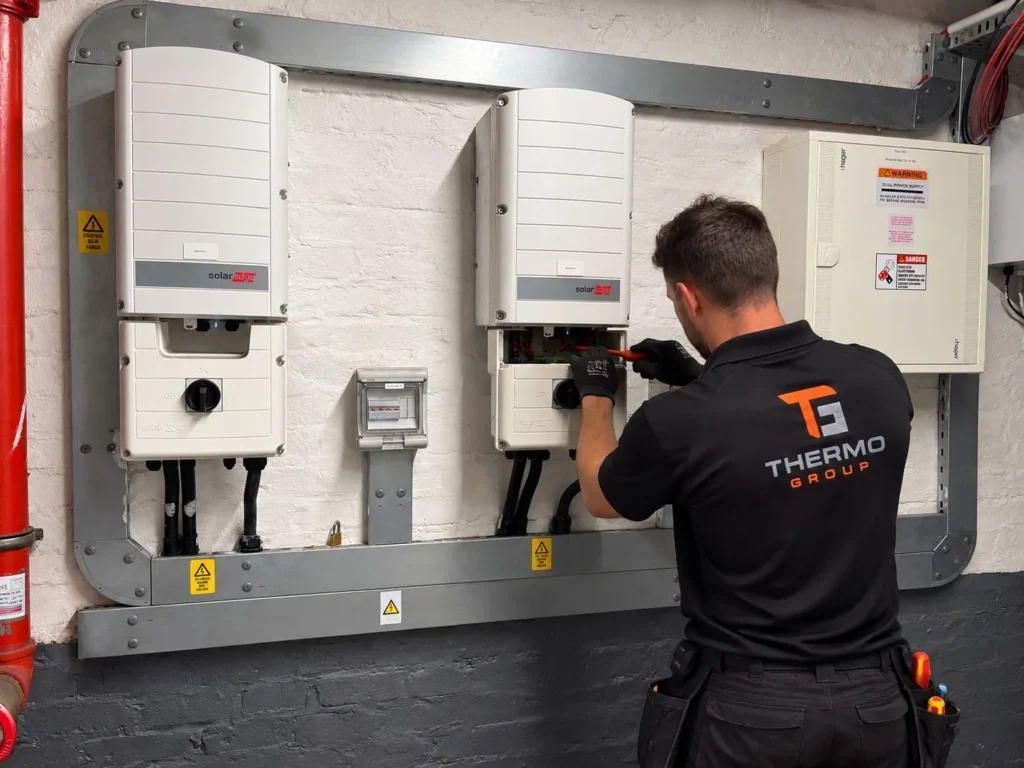
Emergency Electrical Faults We Fix
Common emergency callouts in Camps Bay:
⚡ Total power failure or dead circuits
🔁 Distribution board (DB) tripping repeatedly
🚿 Burst or faulty geyser elements
🌩️ Load-shedding related faults and surge damage
🔌 Sparking plugs, switches or exposed wiring
🔋 Inverter or backup power changeover failures
🐀 Rodent or corrosion damage to outdoor wiring
What Causes Emergency Callouts In Camps Bay
Fast, Safe Emergency Electrical Repairs In Camps Bay
An electrical emergency in Camps Bay isn’t just inconvenient — with steep, hard-to-access properties and expensive fittings, fixtures and backup systems, a delayed or incorrect repair can get costly fast. Our emergency electricians come prepared to diagnose DB tripping, dead circuits and burst geyser elements on the first visit, and we carry the parts needed for the most common faults we see in the area.
Backup Power & Load-Shedding Faults
Camps Bay’s high rate of inverter and backup-battery installations means load-shedding-related faults are common — from changeover switches sticking to DB boards tripping under the strain of repeated power cycling. We test and repair backup power wiring safely, without risking a fire hazard from an incorrect changeover setup.
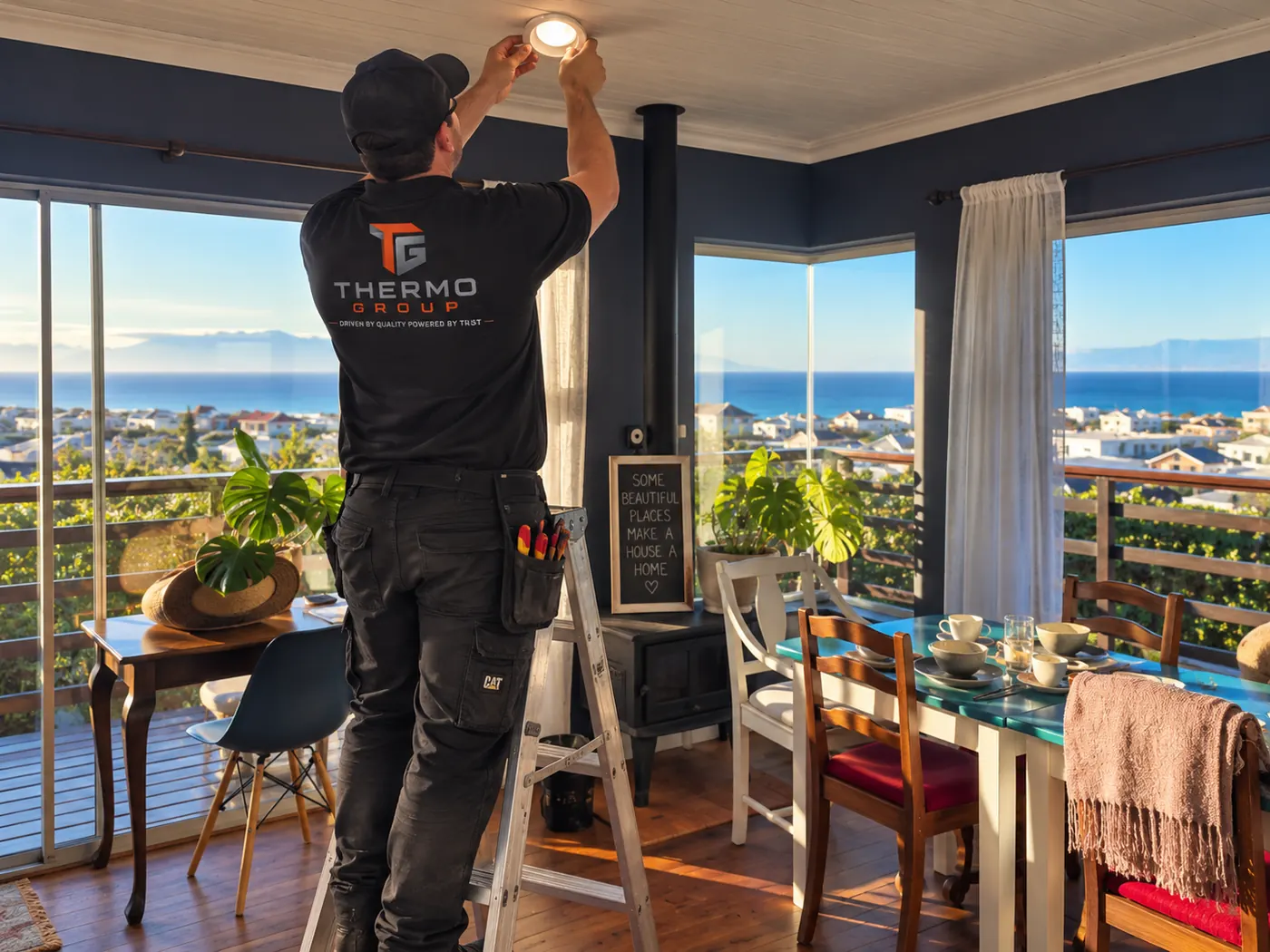
We Don't Just Fix It — We Make Sure It Stays Fixed
Every emergency repair we carry out in Camps Bay is followed up properly — we identify the root cause, not just the symptom, so you’re not calling us back out for the same fault next month.

Certificate of Compliance After Every Repair
Any electrical repair that touches your wiring should be certified. We issue a valid Electrical Certificate of Compliance (COC) after emergency repairs where required — see our Compliance Certificates Camps Bay page for COC-only inspections.
Your Local Emergency Electricians
Fast, qualified emergency electrical repairs for Camps Bay homes and apartments — day or night, with a valid Certificate of Compliance after every job.
Driven by Quality. Powered by Trust.
More Electrical & Related Services In Camps Bay
Not an emergency? See our Electrician Camps Bay page for rewiring, DB upgrades and inspections, or our Solar Installations Camps Bay and Solar Maintenance & Repairs Camps Bay pages for solar work.
Emergency or Can It Wait? A Practical Guide for Camps Bay
Not every electrical problem needs a call in the middle of the night, but some cannot be left until morning. Knowing which is which helps you act sensibly and avoids both panic and risky delay.
Treat these as emergencies
- a burning smell, smoke, sparks or scorch marks at a socket, switch, plug or the distribution board
- exposed or damaged live wires, or a fitting that is hot to the touch
- water in contact with electrical equipment, such as a flooded plug point or a leaking light fitting
- an electric shock, even a mild tingle, from an appliance, tap or metal fitting
- a board or breaker that buzzes, crackles or will not stay on and has a burnt smell
- a swollen, hot or smoking battery or inverter
Usually not an emergency
- one breaker that tripped once and stayed on after being reset
- a single dead socket or a failed light bulb
- a power cut affecting the whole street, which is normally a supply issue
- an earth leakage unit that tripped during a storm and has been fine since
If you are unsure which list your problem belongs on, treat it as urgent and phone. Describing the symptoms is usually enough for an electrician to tell you whether it can wait.
Immediate Safety Steps Before the Electrician Arrives
These steps are general and apply to any property. Your own safety comes before saving equipment, and if anyone is in danger or there is a fire, call the emergency services first.
- Do not touch anything that is wet, scorched or sparking. If someone is in contact with a live source, do not grab them. Switch the power off if you can do so safely, or use a dry non-conductive object to separate them.
- Switch off at the main switch only if it is dry and safe to reach. If the board itself is wet, burning or sparking, stay away from it.
- Never use water on an electrical fire. Leave the building and call the fire service.
- Unplug appliances only if the plug and wall are dry and undamaged. Otherwise leave them and switch off at the board.
- Do not keep resetting a breaker that trips straight away. Each reset sends current into the fault.
- Keep children and pets away from the affected area and keep the access route to your board clear.
Once the area is safe, note what happened, take photos if it is safe to do so, and phone 021 203 5337 or 082 302 0683.
Why Electrical Emergencies Happen in Camps Bay
The setting explains many call-outs. The suburb sits on the Atlantic coast beneath the Twelve Apostles, and local property profiles note significant wind exposure. The south-easter blows mainly between October and March, with gusts that can reach about 120 km/h in extreme cases, though exposure varies from plot to plot because rock and slope shelter some areas more than others.
What that means for the installation
- Salt and moisture. Sea air and wind-driven rain work their way into outdoor sockets, gate motors, garden lighting and exposed junction boxes. Corroded terminals run warm and eventually fail.
- Older boards. Cottages and older homes may still have boards without earth leakage protection or with breakers that no longer trip reliably.
- Heavy modern loads. Large homes with pool plant, air-conditioning and standby systems can overload circuits that were designed for far less.
- Seasonal strain. Heavy use of heating, cooling and entertaining equipment when the house is full tests wiring that has been idle for months.
Warning signs worth acting on before they become emergencies
Many emergencies announce themselves first. Look, without touching, for discoloured or warped plastic around sockets and switches, rust or green-white deposits on outdoor fittings, a board that buzzes or smells faintly of hot plastic, lights that dim when a large appliance starts, bulbs that fail again and again, and an earth leakage unit that trips repeatedly in wet weather. Any of these justifies a planned inspection, and it is a lot easier to arrange than a night-time call-out.
Apartment Blocks: Is the Fault in Your Unit or in the Building?
Many Camps Bay residents live in apartment blocks, and the first question in an emergency is where the fault actually is. A dead unit with a healthy neighbour usually points to a problem at your own board or in your unit’s wiring. A dead floor, a failed lift or dark passages usually point to the building’s common supply.
The dividing line normally falls at your unit’s distribution board. Faults beyond it, in risers, meter rooms or common-area circuits, belong to the body corporate, and the managing agent or trustees need to be told. Faults on your side are your responsibility and can be repaired by an electrician you appoint.
If you are not sure, an electrician can test at your board and tell you which side the fault lies on. That is useful information to pass on to the managing agent, and it avoids paying for repairs that are not yours to make. Have the unit number, access details for the building and a contact for the security desk or managing agent ready when you phone.
Common-area emergencies, such as a burning smell from a meter room or sparking in a communal passage, should be reported to the building’s management straight away as well. Keep people clear of the area, and do not let anyone open a meter room or riser cupboard that shows signs of heat or water.
Load-Shedding, Power Returns and Standby Systems at Night
Outages create their own emergencies. When power returns, the supply can arrive with a surge, and appliances that were running when it dropped all try to restart together. Fridge and freezer compressors, pool pumps and geysers are the usual culprits. The result can be a tripped main breaker, a failed appliance or, in the worst cases, damage to the board itself.
Standby systems add more possibilities. An inverter that does not switch over, a changeover switch that sticks, or a battery that overheats are all urgent in their own way. A lithium battery that is swollen, very hot or giving off fumes should be treated as a safety hazard: move away from it, ventilate if you safely can, and do not try to open or charge it.
After an outage, a few precautions help:
- switch off large appliances at the wall during an outage, and bring them back one at a time
- keep sensitive electronics on surge-protected plug strips
- do not run extension leads from a generator into a house or through a window, because that can feed power back into the supply
What Happens on a 24/7 Emergency Call-Out
Thermo Group is open 24 hours a day, seven days a week, with no call-out fee. Here is how a typical emergency visit works, so nothing comes as a surprise.
- The phone call. We ask what happened, what you can see, smell or hear, and whether anyone is at risk. If it sounds dangerous, you will be told what to do while help is organised.
- Making safe. On arrival, the first job is to isolate the fault and remove the danger, which may mean switching off a circuit or the whole board.
- Finding the cause. Testing identifies why it failed, not just which breaker tripped.
- Repair or temporary fix. Where a full repair needs parts or planning, the installation is left safe and the remaining work is quoted. Quotes are free and carry no obligation.
- Testing and paperwork. Repaired circuits are tested and you are told whether a certificate of compliance applies.
Have this ready when you call
- the full address, unit number and any gate, intercom or parking instructions
- where the distribution board is and whether it is easy to reach
- what happened, what you noticed and when
- whether any appliance, inverter or battery was involved
- a contact person on site if you are not home
After the Repair: Certificates, Insurance and Preventing a Repeat
An emergency repair is not always the end of the matter. Where the work involved additions or alterations to the installation, the regulations call for a certificate of compliance for that work, and an electrician can tell you whether yours qualifies. A change of ownership is a separate trigger, so if you are selling soon, read our page on electrical certificates of compliance.
If damage might lead to an insurance claim, keep the invoice, any report or test results and photos of the damaged equipment, and notify your insurer promptly. Follow-up work is often sensible too: a replacement board, surge protection, or sealing and replacing corroded outdoor fittings. Our distribution board upgrades page explains the usual options, and our standard electrician in Camps Bay service handles planned work.
For the wider picture, see emergency electricians in Cape Town. We also attend emergencies in Clifton, Bakoven and Bantry Bay.
Emergency Electrician Camps Bay: More Questions Answered
It can be. Flickering across every circuit often means a loose connection at the board, the meter or the incoming supply, and loose connections can overheat. Switch off heavy appliances and avoid using the board until it has been checked. If the fault is on the supplier’s side of the meter, it has to be reported to them.
No. A breaker that trips immediately is reacting to a fault, such as a short circuit or an overload. Each reset pushes current into that fault and can damage wiring or the board. Leave the breaker off, unplug what was connected if it is safe, and have the circuit tested before it is used again.
Treat it as urgent. A hot or scorched socket, plug or cable can ignite without warning. Switch off the circuit at the board if it is safe, do not use the socket, and keep flammable items away. Phone an electrician and describe the smell. Do not wait to see if it fades.
Not usually. A street-wide outage is normally a supply or load-shedding matter. Check with neighbours, look at the municipal outage information and confirm your own main breaker is on. Call an electrician if only your property is out, if you smell burning, or if the power comes back unevenly.
Move people and pets away, do not touch or open the unit, and do not charge it. Switch it off at the isolator only if you can reach it safely. Ventilate the area if possible and call an electrician. If there is smoke, fire or fumes, leave the building and call the emergency services.
Emergency work starts with making the installation safe, but the aim is to find why it failed. Testing shows whether the cause was moisture, overload, a loose connection or a failing component. If a lasting repair needs parts or planning, the property is left safe and the remaining work is quoted.
Yes, if it is safe to do so. Photograph the damaged equipment, the board and any water or burn marks before anything is moved. Keep the electrician’s invoice and any test results. Your insurer will say what documents they need, so notify them promptly and ask.
Someone must be able to give safe access to the property and the distribution board. If you are away, arrange a trusted contact such as a neighbour, a caretaker or the managing agent, and give the electrician their number. In a block, security may also need to be told to let the electrician in.
Need An Emergency Electrician In Camps Bay Now?
Fill in your details below or call us directly and our team will respond as quickly as possible.
Sparking, burning smells, exposed or melted wiring, a total loss of power, or a tripped main breaker that won’t reset are all genuine emergencies that need an electrician out to your Camps Bay property immediately. A single dead plug point or a light that’s stopped working usually isn’t urgent and can be booked in as a normal call-out — if you’re not sure which yours is, call us and we’ll tell you honestly.
Yes, after-hours and weekend emergency call-outs to Camps Bay carry a call-out fee, and we’ll always confirm it with you before we head out so there are no surprises. You’ll get a clear quote for any repair work before we start, on top of that call-out fee.
If it’s safe to reach, switch off the main breaker on your DB board to isolate the fault, and keep children, pets and water away from any exposed wiring or sparking outlets. Don’t attempt your own repairs in the meantime — our electrician will be with you in Camps Bay as quickly as possible to sort it out safely.
Emergency Electrical Services in Camps Bay
Qualified, insured emergency electricians serving Camps Bay’s beachfront apartments and cliffside homes.
Other Thermo Services In Camps Bay
- Certificate of Compliance Camps Bay
- Electrician Camps Bay
- Solar Installation Camps Bay
- Solar Maintenance & Repairs Camps Bay
See all Emergency Electrician areas in Cape Town or everything we offer in the Atlantic Seaboard.