

Thermo Group — Trusted Electricians in Hout Bay
Professional electrical services for homes and businesses in Hout Bay — from rewiring and DB upgrades to fault-finding and compliance inspections, handled by qualified, insured electricians who know the valley.
Whether you’re in a home on the slopes above the harbour, a property near Imizamo Yethu, or running a business at the Hout Bay harbour itself, Thermo Group brings the same quality workmanship we’re known for across our compliance, solar and plumbing work in the area.
Need an electrician in Cape Town now?
Registered, insured electricians. Open 24/7. Free quotes, no call-out fee.
Hout Bay’s single main access road, valley fog and mix of residential, harbour-industrial and informal settlement areas make it a different electrical job from the rest of Cape Town. We handle full and partial rewiring, distribution board upgrades, fault-finding, and electrical compliance inspections for homes and businesses throughout the valley.
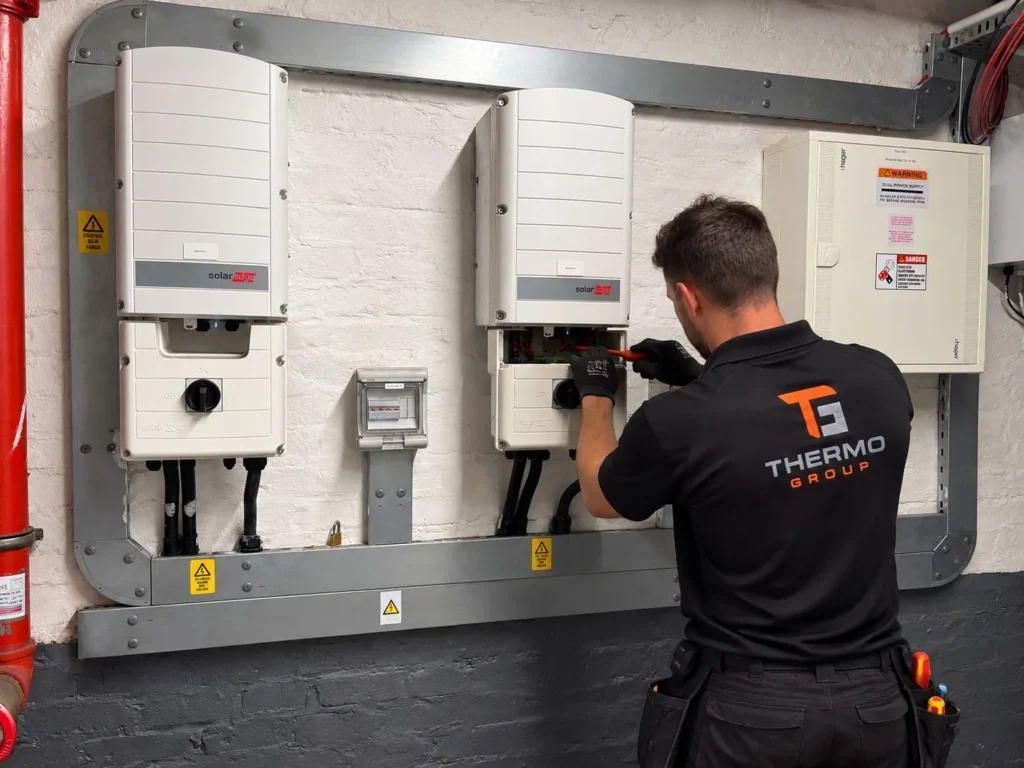
Complete Electrical Solutions
Our electrical services include:
⚡ Full and partial rewiring
🔌 Distribution board (DB) upgrades and replacements
🔍 Electrical fault-finding and troubleshooting
💡 Lighting and plug point installations
🐟 Harbour and commercial refrigeration circuit work
🔋 Backup power and inverter changeover wiring
📋 Electrical Certificate of Compliance (COC) inspections
What We Watch For In Hout Bay
Why Hout Bay’s Electrical Work Isn’t One-Size-Fits-All
Hout Bay spans everything from upmarket homes on the slopes above the harbour to fishing and commercial premises at sea level, with a range of housing in between. Each has different electrical demands — a harbour-front business needs robust three-phase power for refrigeration and processing equipment, while a home in the hills may need backup power wiring for load-shedding and a DB board sized for pool, garden and entertainment circuits.

Working Around Hout Bay’s Valley Conditions
The valley’s fog and damp climate mean outdoor and harbour-side electrical fittings need to be properly rated and sealed to avoid moisture-related faults. We factor this into every installation and repair, and we’re familiar with the access logistics of Hout Bay’s single main road when planning larger jobs.
Beyond Installation — We Maintain What We Wire
At Thermo Group, our relationship with Hout Bay clients doesn’t end at sign-off. We follow up on circuits exposed to valley damp and harbour conditions, so moisture and corrosion-related wear gets caught early.

Certificate of Compliance You Can Rely On
Electrical work is only complete once it’s properly certified. Our electricians issue a valid Electrical Certificate of Compliance (COC) after rewiring, DB upgrades or fault repairs — essential for insurance, sale of property, or municipal sign-off. See our dedicated Compliance Certificates Hout Bay page for COC-only inspections.
Your Local Hout Bay Electricians
From rewiring and DB upgrades to fault-finding and compliance, Thermo Group is Hout Bay’s trusted electrical contractor — quality workmanship, backed by a valid Certificate of Compliance.
Driven by Quality. Powered by Trust.
More Electrical & Related Services In Hout Bay
Need power for a solar or backup system too? See our Solar Installations Hout Bay and Solar Maintenance & Repairs Hout Bay pages. Facing an electrical emergency right now? Visit our Emergency Electrician Hout Bay page for rapid callouts.
Electrical Work in Hout Bay: Estates, Mountain Slopes and Older Houses
Hout Bay sits in a valley with mountains to the north, east and west and the Atlantic to the south, and its housing reflects that setting. Agents describe everything from apartments and townhouses to family houses, smallholdings and secluded forest homes, and a large share of the homes sit in gated lifestyle estates on the mountain slopes. A few Victorian-era buildings from the nineteenth century still stand in the valley as well. That variety means an electrician needs to know what kind of property they are walking into before they can say what is wrong with it.
Homes inside estates
Estate homes are often newer and larger, with outbuildings, pools, gate motors and sometimes boreholes. The faults tend to be about capacity and distance, not age: a main board that has been extended several times, long cable runs to a garage or cottage, and sub-boards that nobody labelled. Many estates also set rules for contractor access and working hours, so check with your managing agent or trustees before booking a visit.
Houses outside estates
Freehold houses on the older streets have usually been altered more than once. Rooms have been added, garages converted and circuits extended by whoever was available at the time. The first job on such a house is to find out what is actually there, using the distribution board and the roof space, before anyone promises a tidy fix.
Sectional title in the valley
Townhouse and cluster schemes follow the same split as elsewhere. The owner looks after the installation from the unit’s own board onwards, and the body corporate looks after common supplies such as shared lighting and gate equipment. If a fault could be on either side, ask your managing agent before you open a shared board.
Rewiring and Upgrading Older Hout Bay Houses
Wiring that was sound when a house was built can struggle with a modern household that runs a heat pump or air-conditioner, an induction hob, a pool pump and an inverter at the same time. South Africa’s wiring code has changed several times. The Electrical Contractors’ Association describes the Blue Code as running from 1952 to 1978 and the Green Code from 1978 to 2001, before SANS 10142-1 took over, so a house built before the 1990s was wired to an earlier rulebook.
Age alone does not make an installation unsafe or non-compliant. What matters is its condition and whether it can be tested and certified. In an older Hout Bay house we normally look for:
- Crowded or fuse-type boards with no spare capacity for new circuits.
- Missing or tired earth leakage protection, including units that no longer trip when tested.
- Brittle or cloth-covered cable in roof spaces and garages.
- Additions made without a certificate, such as garden lights, a cottage supply or a converted garage.
- Weak earthing and bonding on metal pipework and outdoor circuits.
A word on heritage
The National Heritage Resources Act says a structure older than 60 years may not be altered or demolished without a permit from the provincial heritage authority. Replacing a board or running a new circuit does not usually change the structure, but chasing into old walls or ceilings can. If your house is in the older part of the valley, ask before work starts, and tell your electrician so the cable routes can be planned around original fabric.
For board replacement specifically, our distribution board upgrades page explains what a new board involves.
Gardens, Outbuildings, Pumps and Pools: Wiring Beyond the House
Properties on the slopes tend to have more happening outside the main building than a typical suburban plot. Garden lighting, a cottage or flatlet, a workshop, a pool, a gate and in some cases a borehole pump or irrigation controller are all common requests, and each one needs a supply that suits the distance and the damp.
- Cable size for distance. A long run from the house to an outbuilding loses voltage along the way, so the cable has to be sized for the length as well as the load.
- Proper armoured or buried cable. Outdoor runs need the right type of cable at the right depth. Indoor-rated cable and flex laid across a lawn fail quickly and can be a shock risk.
- A sub-board where the load justifies one. A cottage or workshop with its own protective devices and labelling is safer and easier to isolate than one fed from a single socket.
- Earth leakage on outdoor circuits. Sockets, pool equipment and garden lighting should be on protected circuits, with weatherproof fittings and sealed cable entries.
- Motor circuits sized for starting current. Pumps and compressors draw a surge when they start, which matters for the cable, the breaker and any backup inverter.
Pool areas and other wet locations carry extra requirements under the wiring code, so pool pumps and lighting should always be done by a registered electrician. Any new circuit or outbuilding supply also needs a Certificate of Compliance for the new work, which our electrical certificate of compliance page explains.
Load-Shedding, Inverters and Surge Protection for Valley Homes
Backup power is part of the wiring, not an accessory plugged into it. A sound installation puts the essential circuits (lights, fridge, freezer, router and a few sockets) on their own sub-board and leaves the stove, geyser and pool pump off it. The changeover must disconnect the mains before the alternative supply connects, and it must be interlocked so the two cannot feed the installation together. That protects anyone working on the lines outside your property.
Where valley homes get caught out
- Inverters added to a board that was never split, so everything is backed up and the battery is flat by evening.
- Gate motors and garage doors that lose power on the backed-up side or the unbacked side, leaving you locked in or out.
- Earth leakage units that trip only when the inverter is carrying the house, which points to how neutral and earth are arranged and needs testing, not guessing.
- Appliances damaged when supply returns, because nothing at the board limits the spike.
The City of Cape Town advises unplugging sensitive electronics before a scheduled outage, since the return of supply can cause voltage spikes. A surge protection device at the board adds a second layer, particularly for routers, fridges, gate controllers and pool electronics. Never connect a portable generator to a wall socket, and ask the City about its own authorisation requirements before buying one.
If you want panels and batteries as well, the wiring has to be ready for them first. See solar installations in Hout Bay for the design and registration side.
Holiday Lets, Shops and Market Stalls: Electrical Duties for Hout Bay Businesses
The valley is busiest on weekends and holidays, when visitors come for the harbour, the restaurants, the markets and the beach. Properties that serve those visitors carry a heavier electrical load and a clearer legal duty than a private home.
Short-term rentals and landlords
Under the Electrical Installation Regulations, the user or lessor of an installation must hold a valid Certificate of Compliance. In practice that means the owner of a holiday let or rental cottage should hold a current certificate before guests or tenants arrive. Kettles, heaters, hairdryers and phone chargers all run in quick succession in a let, so overloaded sockets and damaged flex are the usual findings.
Restaurants, shops and stalls
Commercial kitchens and food stalls depend on several things at once: cooking circuits, extraction, refrigeration, lighting, card machines and music. Each should be on a correctly rated circuit with the board labelled so staff can isolate a section quickly. Coastal air is hard on outdoor signs, lights and weatherproof boxes, and these are worth inspecting before the busy season, not during it.
Planning around trading hours
Work in an occupied premises is best scheduled for the quiet part of the week. Tell your electrician about refrigeration, alarms and any tills or servers that cannot lose power, so the supply is only switched off in sections and for as short a time as the testing needs.
Choosing and Checking an Electrician in Hout Bay
Anyone can print a business card, so check before you let someone work on your board. Ask for the company name and the registration details of the person who will sign the Certificate of Compliance. Only a registered person can sign a Certificate of Compliance, and the Department of Employment and Labour has alerted the public to impostors who sell certificates for installations that were never tested. A genuine certificate comes with a completed test report.
Thermo Group’s ECA membership is one more point you can check, although belonging to an association does not replace registration or a valid certificate.
What a standard visit involves
- You describe the problem and the type of property, and mention any estate access rules.
- The electrician inspects the board and the circuits involved and tests before suggesting anything.
- You get a clear explanation of what is wrong, what is urgent and what can wait.
- Any new or altered work is tested and certified for that work.
Useful things to have ready: the estate or complex name, gate or intercom details, the location of the main board and any sub-boards, and a photo of the board if you can take one safely. If it turns out to be urgent, the emergency electrician in Hout Bay page explains the after-hours service.
Neighbouring areas reached over the mountain passes are covered too, including Llandudno, Camps Bay, Constantia and Noordhoek. For the wider service, see the main electrician in Cape Town page, or request a free quote to describe your job. You can also phone 021 203 5337 or 082 302 0683 and talk it through.
Electrician Hout Bay: More Questions Answered
Often, yes. Many estates and complexes set rules for contractor access, working hours and noise, and some ask for contractor details in advance. Check with your managing agent or trustees, and give your electrician the gate and access details when you book so the visit goes smoothly.
Usually, yes. A good electrician plans cable routes through roof spaces, floors and existing conduit to limit chasing into walls. If the building is older than 60 years, check whether heritage rules apply before work starts, and tell your electrician so original fabric is protected.
Motors and heaters draw a surge when they start, and a long, undersized cable can add voltage drop. The cause may be an overloaded circuit, an unsuitable breaker or damp in a fitting. It needs testing, not resetting. A dedicated, correctly sized circuit with earth leakage protection is usually the fix.
Normally, yes. Pumps are motors with a high starting current, so they should have a correctly rated breaker, earth leakage protection, and an isolator near the pump. If you add an inverter later, the starting surge must be allowed for, or the inverter may trip each time the pump starts.
It can be, but only if the inverter, batteries and wiring are sized for it. Most homes back up essential circuits such as lights, fridge and router, and leave the geyser, stove and pool pump off. A changeover with a proper interlock is required, and the board may need splitting first.
Generally the owner looks after the installation from the unit’s own distribution board onwards, and the body corporate looks after common property such as shared lighting, gates and common boards. Scheme rules differ, so check them or ask your managing agent if you are unsure which side a fault is on.
The wiring regulations expect whoever uses or lets out an installation to hold a valid certificate, so owners of holiday lets and rental cottages should keep a current one on file. Guests cannot judge wiring safety themselves, and insurers and agents often ask to see the certificate.
No. New or altered electrical work needs its own Certificate of Compliance under the wiring regulations, issued by a registered person after testing. Uncertified additions can cause problems at an insurance claim or when you sell, so have the work done and certified together.
Book Your Hout Bay Electrician
Fill in your details below and our team will contact you to discuss your electrical project in Hout Bay.
Our call-out fee covers the electrician getting to you in Hout Bay and diagnosing the problem, and we’ll always confirm it with you upfront before we head out. Any repair or installation work is then quoted separately once we know exactly what’s needed, so you’re never left guessing at the final bill.
We handle jobs of every size in Hout Bay — from a single faulty plug point or light fitting to full rewires and DB board upgrades. No job is too small to book in, and we’ll be upfront if a “small” issue turns out to need more extensive work.
For a standard booking in Hout Bay we can usually schedule you within a day or two, and we offer priority response for genuine emergencies. Give us a call and we’ll give you an honest estimate of our earliest availability for your specific job.
Electrical Services in Hout Bay
Qualified, insured electricians serving Hout Bay’s homes, harbour businesses and surrounding valley.
Other Thermo Services In Hout Bay
- Certificate of Compliance Hout Bay
- Emergency Electrician Hout Bay
- Solar Installation Hout Bay
- Solar Maintenance & Repairs Hout Bay
See all Electrician areas in Cape Town or everything we offer in the Atlantic Seaboard.